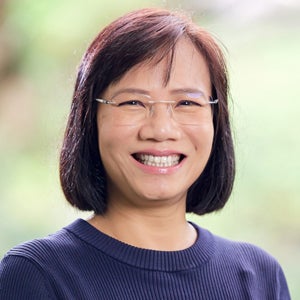
Abigail SIN
Yong Siew Toh Conservatory of Music, National University of Singapore (NUS)
Sub-Theme
Building Learning Relationships
Keywords
Assessment design, student agency, learning relationships, artistic research
Category
Lightning Talk
There have been many invigorating conversations and developments in Higher Music Education institutions globally that have led to a greater emphasis on integrating artistic practice, research and social engagement. There have been efforts to build on existing curricular frameworks, and design initiatives that equip conservatory students with skills and perspectives to become “makers in society”. However, these changes are sometimes met with confusion and resistance, especially from musicians who might not see traditional research outputs as relevant to their individual artistic practice and priorities.
In this lightning talk, I explore how incorporating student-led assessment design in first-year music history classes has created opportunities to foster more meaningful learning relationships with students and encourage deeper engagement with class concepts. Assessment-as-learning provides opportunities to instill artistic research skills at the very beginning of the undergraduate conservatory experience. Using examples of student work that include a wide range of creative outputs and processes (eg. an RPG, watercolour painting, film photography and electronic compositions), I examine the challenges and learning outcomes of this collaborative, student-centered approach, while reflecting on my own praxis as an educator and artist-researcher. I propose that incorporating artistic research skills and outlooks in assessment design empowers conservatory students to exercise agency and express their burgeoning musical identity in their academic work alongside their preferred modes of artistic expression.
.
References
Canham, N. L. (2016). Making mavericks: Preparing musicians for independent artistic culture. Arts and Humanities in Higher Education, 15(3–4), 407–413. https://doi.org/10.1177/1474022216647709
Creech, A., Varvarigou, M., & Hallam, S. (2020). The role of further and higher education in shaping musical possible selves. In Contexts for Music Learning and Participation (pp. 81–101). Palgrave Macmillan, Cham. https://doi.org/10.1007/978-3-030-48262-6_5
Duffy, C., & Harrop, J. (2017). Towards convergence: Academic studies and the student performer. In J. Rink, H. Gaunt, & A. Williamon (Eds.), Musicians in the Making: Pathways to Creative Performance (p. 0). Oxford University Press. https://doi.org/10.1093/acprof:oso/9780199346677.003.0020
Gaunt, H., Duffy, C., Coric, A., González Delgado, I. R., Messas, L., Pryimenko, O., & Sveidahl, H. (2021). Musicians as “makers in society”: A conceptual foundation for contemporary professional higher music education. Frontiers in Psychology, 12, 713648. https://doi.org/10.3389/fpsyg.2021.713648
Jessop, T. (2023). From alienation to engagement in assessment design. In Student Agency and Engagement. Routledge.
Lindgren, R., & McDaniel, R. (2012). Transforming online learning through narrative and student agency. Journal of Educational Technology & Society, 15(4), 344–355. http://www.jstor.org/stable/jeductechsoci.15.4.344
Martin, J. (2004). Self-regulated learning, social cognitive theory, and agency. Educational Psychologist, 39(2), 135–145. https://doi.org/10.1207/s15326985ep3902_4
Rutherford, S., Pritchard, C., & Francis, N. (2025). Assessment IS learning: Developing a student-centred approach for assessment in Higher Education. FEBS Open Bio, 15(1), 21–34. https://doi.org/10.1002/2211-5463.13921