
About the Affiliates Programme
The CTLT Affiliates Programme (CAP) is a new development opportunity for full-time faculty members offered by the Centre for Teaching, Learning and Technology (CTLT) to nurture and develop our faculty members to lead and make a positive difference to the learning and well-being of their students, peers and the wider NUS community.
Aims
The CTLT Affiliates Programme is designed to bring about the following goals:
- develop faculty members who are able to lead and facilitate educational change by enhancing their leadership towards professional learning through partnership with CTLT;
- bring new perspectives to the work of CTLT through immersing and working closely with academic developers on our programs, workshops, initiatives related to teaching and learning and other aspects of academic development work in the Centre; and
- promote greater outreach by fostering, mentoring and sharing good practices with peers, colleagues and the wider NUS community.
Collaborating Opportunities
- existing CTLT programmes and initiatives
- local programme/initiative within the Faculty/Department with CTLT support
- new CTLT session/workshop/e-module
- inquiry project
Choice of Projects (suggested examples):
| Aim | Generative question | Time commitment (excludes preparation) |
| To plan, design, develop and evaluate a comprehensive programme to enhance teaching assistantship across all levels. | How do we prepare and support TAs to engage students meaningfully in their learning? | At least 2 runs over 2 semesters |
| To enhance PDP-T for early career academic development pathways | What kinds of PD do early career academics need to teach well and develop their capacities? | 2 runs over 2 semesters |
| To prepare and mentor junior colleagues for promotion on different career tracks | How to create and implement a mentorship programme within the department? | 1 session per month, over a 6-month period |
| To prepare and mentor junior colleagues to apply for university teaching awards. | How to create and implement a learning community to help colleagues prepare for teaching awards? | 1 session per month, over a 6- month period |
| To plan, design, develop, implement and evaluate a CTLT course to enhance faculty members’ teaching skills – e.g., curriculum development, pedagogy, assessment & feedback, technology-enhanced learning, etc | What kinds of PD do faculty members need to teach well and develop their capacities? | At least 2 runs over 2 semesters |
| To design and carry out an inquiry study on a teaching/learning issue within the department/faculty/school. | How to carry out an inquiry study to address a teaching/learning problem? | Inquiry project timeline over a year |
Proposed Timeline of Project Activities
Affiliates will work closely with academic developers to plan, develop and implement their projects within the agreed timeline.
Participation and Eligibility
The initiative is open to NUS faculty in all career tracks, including tenure track, educator track, clinical faculty, and others.
This is a 1-year programme, with possibility of renewal on a case by case basis.
How to Participate
Applications for FY2026 CTLT Affiliates Programme is NOW OPEN.
Please refer to the Call for Expression of Interest (EOI) and the Application EOI Forms:
Application is open to all faculty teaching members of NUS, with at least 5 years of teaching experience.
For more information about the CTLT Affiliates Programme, please contact:
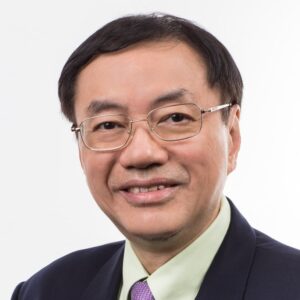
A/P SOO Yuen Jien
Director, Teaching & Learning, CTLT
Email: sooyj@comp.nus.edu.sg
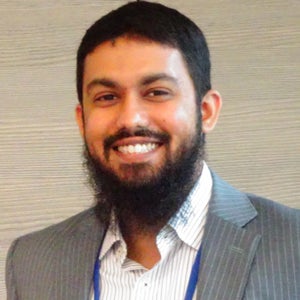
Mark GAN
Associate Director, CTLT
e-mail: cdtgjs@nus.edu.sg
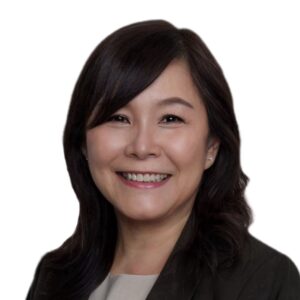
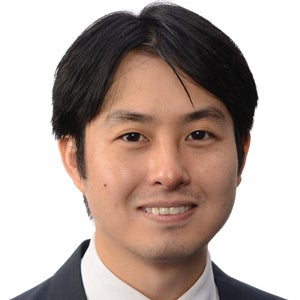
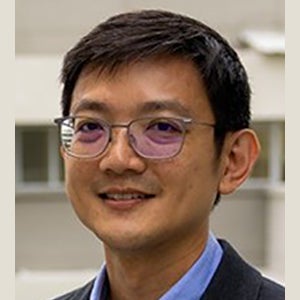
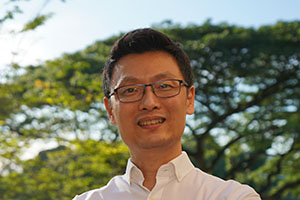
Our CTLT Affiliates
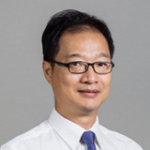
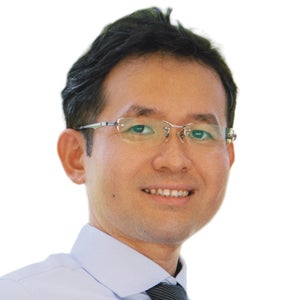
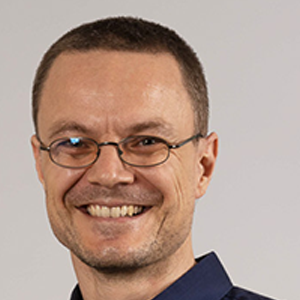
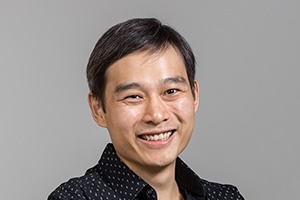
Alan CHENG Ho-lun 鄭浩璘 is a Senior Lecturer in the NUS Department of Computer Science. His research interests include computational geometry, parametric surfaces, computer graphics, visualization. He was a teaching assistant during his master degree and received the Best Teaching Assistant Award in 1996 at HKUST. During the Ph.D. years, he was a visiting scholar in the BioGeometry Center in Duke University.
Alan can be reached at hcheng@comp.nus.edu.sg.
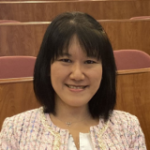
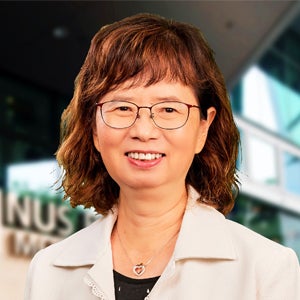
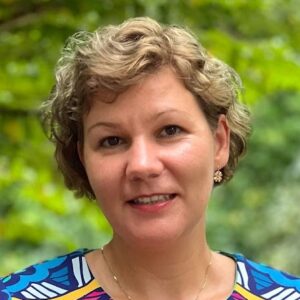
Cindy has over 10 years of experience in Chemical Engineering Education. Currently, she is Senior Lecturer and co-Director of the Chemical Engineering (MSc Programme) with the Department of Chemical & Biomolecular Engineering, NUS. Cindy has keen interest and training in life-long learning and facilitating adult learning. She is a committee member of the IChemE Education Special Interest Group and also in the focus groups of Sustainable Production and Digitalization, respectively. She has been actively developing and introducing new courses and Graduate Certificate Programme to the Chemical Engineering Curriculum in the area of Sustainability to prepare and educate students on new technologies and skills in sustainable development in the Chemical Industry. She has a keen interest to promote student learning engagement and well-being both during their undergraduate and post-graduate journey.
Web: https://blog.nus.edu.sg/chellyc
Email: chellyc@nus.edu.sg

NORHAYATI Ismail has been teaching with the Centre for English Language Communication (CELC), NUS, for the past 25 years. Prior to joining CELC, she has worked in editing with an international law publishing firm and corporate relations for a professional services firm. As an Educator, she has designed, coordinated and taught a range of professional communication courses to undergraduates and graduates across diverse disciplines (Business, Computing, Design & Environment (Real Estate), Engineering). She has also developed and taught business writing courses to working adults and English as a Medium of Instruction Training Programme to content professors from regional universities. Her main research interest is feedback and student engagement through material design, questioning, and use of IT.
Norhayati can be reached at norhayati.ismail@nus.edu.sg.
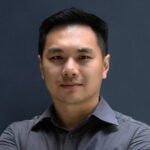
Terrence TAN Chun Liang is a senior lecturer and director of the Bachelor of Landscape Architecture Programme in the Department of Architecture, College of Design and Engineering (CDE), NUS. He is lecturing for both Bachelor as well as Master of Landscape Architecture courses, including “Introductory GIS for Landscape Architecture” and “Urban Greening: Technologies and Techniques”. His research focus is on urban greenery systems and their impact on heat transmission, wellness and maintainability.
Terrence can be reached at tcl@nus.edu.sg.

Shobha AVADHANI is a Senior Lecturer at the Department of Communications and New Media, NUS, where she teaches courses in public speaking, digital media cultures, race and gender in the media, and qualitative research methods. She has published research on the intersection of youth, citizenship and new media. In her current research, she continues to engage with questions relating to communication technologies, citizenship, and feminist pedagogy.
Shobha can be reached at shobha@nus.edu.sg.

Chua Dingjuan is a Senior Lecturer teaching at the Department of Electrical and Computer Engineering (ECE) at NUS. She is also the Director of the Design and Engineering Scholars Programme since 2025. Dingjuan received her Ph.D and Bachelor’s Degree in Electrical Engineering from NUS ECE. She was a Research Engineer from 2007 to 2010, and has been pursuing teaching starting from a Teaching Assistant role in ECE since 2011. She enjoys teaching freshmen courses related to fundamental electrical engineering concepts and digital logic design. Her research interests are in FPGA-based education as well as problem and project-based learning.
Dingjuan can be reached at elechuad@nus.edu.sg.

Bridget McConnell is a senior lecturer in psychology. She teaches classes on learning and behaviour and research methods and statistics. Relatedly, Bridget’s research interests are in applications of associative learning to experimental psychopathology and scholarship of teaching and learning, particularly related to assessment design and the teaching of research methods and statistics. At present, Bridget leads a CTLT learning community on the topic of better understanding the experiences of FASS students taking statistics courses. Her project develops a package of AI-integrated assessment templates designed to support instructors in research methods and statistics courses. The deliverable will be a flexible toolkit of assessment designs and rubrics that faculty can easily adapt without the time-intensive work of building them from scratch. Although initially focused on statistics and research methods, the templates are broadly transferable across disciplines. This project ultimately aims to expand the repertoire of AI-enabled assessment practices while keeping student mastery of content at the center of learning.
Bridget can be reached at bridget.mcconnell@nus.edu.sg

Carissa Foo teaches the humanities (literature, creative writing) and writes fiction. She received her Ph.D. at Durham University with a focus on 20C women’s writing. Her current research interests include love studies and the ethics of care in feminine relations. She is committed to bridging the gaps between the creative and the critical, to build learning environments wherein creativity and critical thinking may shape a style of inquiry essential to self-development. Her project is interested in the ethos and environment of a creative classroom — how to develop ways to encourage shifts in teaching praxis that promote the inclusion of creativity into the classroom through carefully designed in-class practices and assignment prompts, inclusive and alternative rubrics, student-oriented instructional processes and responsive teaching.
Carissa can be reached at carrisa.foo@nus.edu.sg

Chen Hui-Chen is a Senior Lecturer at the Alice Lee Centre for Nursing Studies, Yong Loo Lin School of Medicine. She integrates social-emotional and cognitive learning approaches across courses such as Medical-Surgical Nursing, Chronic Disease Management, Physical Examination, Socio-ecological Determinants of Health, and Public and Community Health. To enhance the student learning journey, she employs innovative strategies including AI-powered team-based learning, AI-supported integrated learning, and simulation-based learning. She also serves as Programme Director for the Bachelor of Science (Nursing Practice PTY3). Her academic interests focus on course design that cultivates learning motivation while addressing AI-related anxiety among adult learners who balance full-time work with part-time study. Her goal is to prepare students with the skills, knowledge, positive mindset, confidence, and digital health literacy required to excel in today’s AI-driven healthcare landscape.
Hui-Chen can be reached at huichen@nus.edu.sg

Chong Yuan Yi (Francis) is a Senior Lecturer in the Department of Chemistry, NUS, and one of the founding members of the Science Educator Network (SCENE). He is passionate about designing interdisciplinary and inquiry-based learning experiences that spark curiosity, deepen conceptual understanding, and fosters a community of inquiry. Francis’s work explores how students co-construct knowledge in interdisciplinary group work by integrating diverse disciplinary insights. As a CTLT Affiliate, Francis focuses on faculty development in interdisciplinary education, empowering educators to teach students how to collaborate and integrate ideas across disciplines.
Francis can be reached at francis@nus.edu.sg

Inthrani Raja Indran is an Education Director with the Department of Pharmacology, NUS Medicine, where she blends pedagogy and innovation, integrating teacher-curated, AI-generated resources—such as flashcards, MCQs with explanations, and mind maps—into the curriculum to promote learning and strengthen retrieval practice. She has an interest in student well-being and in building faculty capacity as academic mentors to better support students experiencing academic difficulty.
Inthrani can be reached at phciri@nus.edu.sg

Elaine Tan is a Senior Lecturer in the Department of Political Science in NUS. She chairs the department’s Undergraduate Studies Committee, sits on the department’s Care Committee supporting student wellness, and co-runs the department’s Peers Programme, which provides writing support to students. She teaches the introductory course to Political Science (‘Introduction to Politics’) as well as courses in International Relations and African politics. Elaine is interested in supporting undergraduate students through academic skills development and initiatives promoting student well-being. Her project seeks to enhance teaching support and expanding opportunities for professional growth and leadership among Teaching Assistants and Instructors in NUS. Key initiatives include developing peer mentoring mechanisms to provide mentorship opportunities and more sources of teaching feedback. In addition, this project seeks to create opportunities for Teaching Assistants and Instructors to share their teaching practices and contribute to enhancing teaching and learning across the university.
Elaine can be reached at poletsy@nus.edu.sg

Foo Maw Lin is a Senior Lecturer at the Department of Chemistry at National University of Singapore (NUS). Before NUS, he has taught at universities in United States, Canada and Japan. At NUS, he has designed and taught theoretical and laboratory courses in inorganic chemistry and renewable energy at undergraduate, graduate and adult learner levels. He is currently team teaching an interdisciplinary course on electric vehicles offered to students from diverse majors in the College of Humanities and Social Sciences (CHS). Pedagogical interests include game-based education, collaborative teaching and interdisciplinary education. His project will identify practical strategies and recommendations for effective collaborative teaching by examining key factors that help teams work well together and applying established frameworks for collaborative approaches.
Maw Lin can be reached at chmfml@nus.edu.sg

Sasidaran Gopalan is a Senior Lecturer in Economics (Educator-Track) at the Lee Kuan Yew School of Public Policy (LKYSPP), National University of Singapore (NUS). He is a passionate economics educator who applies a plethora of active learning tools in the classroom to teach economics to a diverse set of graduate students of public policy, with very little economics background. At LKYSPP, NUS, he regularly teaches courses on Macroeconomics for Public Policy, Analytical Issues in Money and Banking, and International Economic Development. He is also currently the co-chair of LKYSPP’s flagship graduate program – Master’s in Public Policy (MPP). In this project, Sasi specifically focuses on formalizing ‘feedback talk’, designing reflective feedback practices, and collecting evidence of its effectiveness (or lack thereof).
Sasidaran can be reached at sgopalan@nus.edu.sg