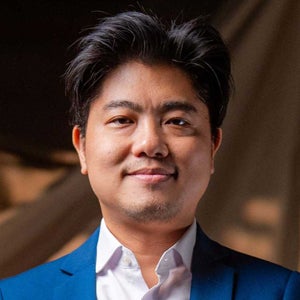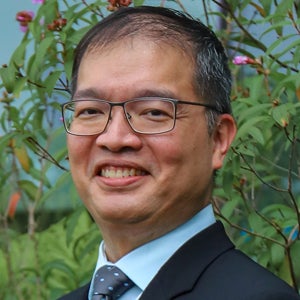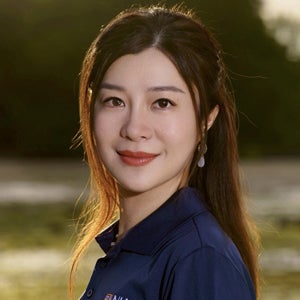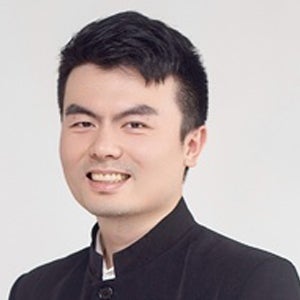

Raiza RIFAAIE1,2, Qin Ying SIM1,2, Chin Yee TAN1,2, Wei Lei (Woody) YEE1,2,*, Yvette SEOW1,3*, Hui Bin CAI1,3, Valerie CHUA1,3, Liren ZHENG1
1Department of Social Work, Faculty of Arts and Social Sciences (FASS), National University of Singapore (NUS)
2GEN2050 Team
3GEN2062 Team
Sub-Theme
Building Technological and Community Relationships
Keywords
Unstructured interactions, relationship-building, mentoring, seniors, service-learning
Category
Paper Presentation
Introduction
In 2021, the National University of Singapore (NUS) introduced “Communities and Engagement” (C&E) as its sixth Common Curriculum Pillar to cultivate critical thinking in broader societal issues through student volunteer action and community building. Two large courses, GEN2050 “Teach SG” and “GEN2062 Community Activities for Seniors with SG Cares”, have been developed in collaboration with the Uplift Programme Office of the Ministry of Education (Singapore), and the SG Cares Office of the Ministry of Culture, Community & Youth and the Agency for Integrated Care respectively. Students enrolled in these student-led activity-based service-learning courses have agency to develop activities for the communities they serve after undergoing training in volunteerism and reflexive learning with NUS tutors. This study demonstrates how unstructured factors (unplanned interactions) during engagement sessions supplement structured factors (planned interactions) to foster stronger relationship building with service recipients. We also explain how to design for such unstructured factors when planning for service-learning projects.
In both courses, undergraduates across various disciplines work in teams of six to eight to plan and conduct 60-80 hours of service to their respective beneficiaries. In GEN2050, students mentor primary or secondary school students in after-school programmes, two to three hours weekly over two consecutive MOE school terms of 20 weeks. The activities include academic support, mentorship care, and enrichment undertakings such as learning journeys. In GEN2062, students engage seniors at Active Ageing Centres (AACs) and Senior Care Centres (SCCs), three hours weekly over five months, to promote cognitive and physical wellbeing, relieve social isolation, and enhance healthy ageing-in-place. These activities involve complex and little-understood dynamics in volunteer-beneficiary relationships that predicate on both structured and unstructured interactions, creating research opportunities to understand and harness these factors to promote the relationship-building process underpinning the success of such volunteerism activities (DuBois et al., 2002).
While the importance of structured factors in the relationship building process is well-recognised (DuBois et al., 2002), both NUS tutor observations and analysis of student reflection suggest that unstructured factors may drive stronger relational breakthroughs. Self-disclosure, where individuals share about themselves, is a crucial aspect of the relationship-building process fostering emotional bonding (Knapp, 1987; Keller et al, 2005). Unstructured factors appear to create more opportunities for deeper self-disclosure, enhancing the quality of relationships in the context of service learning. On-site observations by NUS tutors suggest these moments often occur serendipitously during and outside of structured activities. Thus, it is of interest to understand the prevalence of these factors and the extent to which they contribute to relational breakthroughs.
We employ two approaches. The first involves a mixed-methods design survey capturing students’ perception of the most impactful and frequent elements that created meaningful conversations, among various structured and unstructured factors. Preliminary analysis from tutor observations suggests self-disclosures frequently occur during unplanned interactions both during and outside the planned engagement. The Borda count method reveals new insights on students’ perception of effective elements that suggest the need to prepare volunteers to be ready for such conversations at different phases of engagement sessions.
The second approach is a sentiment analysis of students’ reflections using a Large Language Model (LLM) to extract and categorise students’ perception of the quality of interactions that foster relationship-building. These interactions are then classified and counted to determine prevalence and effectiveness. Preliminary analysis reveals unstructured interactions as significant mechanisms towards rapport-building in both courses. In this paper, we will report the insights achieved, for example, in how mentorship personalisation derived from empathetic guidance and spontaneous peer-led interactions, conditional on the observations and responses of the mentors, fosters more effective mentor–mentee relationships.
With better understanding of how unstructured factors can impact relational development, this paper informs the importance of deliberate and thoughtful integration of unstructured factors into the design of existing curriculum across C&E courses. This is necessary to exploit spontaneity and improvisation, important life skills in themselves, to promote deeper engagement with target communities. Furthermore, these insights could provide a practical foundation for mainstream curriculum to shift from instructional to relational approaches, prioritising human connection in educational design, and offering actionable strategies to enhance programme implementation, potentially transforming how service-learning fosters meaningful community connections.
Acknowledgements
The GEN2050 and GEN2062 Tutor Teams are presently hosted by the Undergraduate Education Unit of the Office of the Provost, NUS. We acknowledge the support and guidance of Ms Ong Mui Hong, Director of Operations & Planning (PVO), and Professor Peter Ho, Vice Provost (UG & TEL). We also acknowledge the support and guidance of Associate Professor Lee Geok Ling, Head of Department of Social Work.
.
References
DuBois, D. L., Holloway, B. E., Valentine, J. C., & Cooper, H. (2002). Effectiveness of mentoring programs for youth: A meta-analytic review. American Journal of Community Psychology, 30(2), 157-197. https://doi.org/10.1023/A:1014628810714
Keller, T. E. (2005). The stages and development of mentoring relationships. In D. DuBois, M. Karcher (Eds.) Handbook of Youth Mentoring (pp. 82-99). SAGE Publications, Inc.
Knapp, M. L. (1978). Social Intercourse: From Greeting to Goodbye. Allyn and Bacon.
Office of the University Registrar, National University of Singapore. (n.d). Communities and Engagement Pillar. Office of the University Registrar, National University of Singapore. https://www.nus.edu.sg/registrar/academic-information-policies/undergraduate-students/general-education/communities-and-engagement-pillar