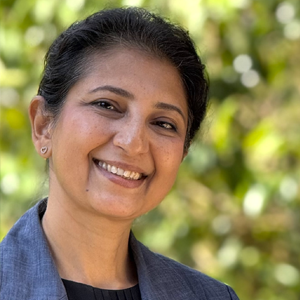

Gene Segarra NAVERA
Centre for English Language Communication (CELC). National University of Singapore (NUS)
Sub-Theme
Building Community Relationships
Keywords
Communities and engagement, empathetic approach, engaged learning, perspective-taking, facilitating relationship
Category
Paper Presentation
“Community-based learning,” writes Moore (2023, p. 38), “creates opportunities for students to develop sustained relationships with community partners and can facilitate encounters with diverse others.” This encounter with diverse others, encouraged through our higher education institutions’ communities and engagement courses, enables students to shift from an analytic approach to issues faced by marginalised communities to an empathetic approach that acknowledges the community members’ agency and their shared humanity with the students (Sturgill, 2020; Moore, 2023). In other words, community engagement allows for perspective-taking, which is necessary for students to understand community partners not as mere objects of help, but as agents who actively solve problems and as resource persons whom they can learn from. How is perspective-taking fostered and realised through a community and engagement course centred on migrant domestic workers in Singapore?
The paper addresses the question by critically examining reflection journal entries and syncretic essays written by students enrolled in UTS2115 “Migrant Workers, Rhetoric, and Performance”, a communities and engagement course offered to students in Tembusu College. The analysis of the students’ writings brings to the surface how an empathetic relationship between students and migrant workers is fostered over a period of time. The reflective journal entries and syncretic essays are chosen as they offer records of students’ engagement with concepts discussed in the seminars; their experiences with interacting, listening to stories, and collaborating with community partners; and how they marry insights from classroom discussions with those from their fieldwork experience.
The analysis adopts thematic and discourse analytic approaches (Braun and Clark, 2006; Gee, 2011) to accomplish the following goals:
- Describe how students mobilise concepts discussed during seminars in their engagement with partners from the migrant workers community.
- Account for how students engage these concepts in their writing not only as analytical tools but as context-sensitive ways of engaging their community partners.
- Demonstrate how the field work experience has enabled students “to rethink their identities and self-interested pursuits”—one of the key learning outcomes of the course and an objective of the Communities and Engagement Pillar of the NUS General Education Curriculum.
These concepts discussed in the seminars—including dialogic performance (Conquergood, 2003), invitational rhetoric (Foss & Griffin, 1995), and rhetorical listening (Ratcliffe, 1999)—are relevant to the students’ field work experience in the course as they offer disciplined perspectives on engaging “diverse others.” How the students grapple and recontextualise these concepts in their field work experience illuminate how abstractions are concretised and made relevant through building relationships with partners. The students’ reflections particularly show how concepts are localised through their experiences on the ground, and how praxis is made possible by applying theoretical concepts into practice and by using practical experience to inform or potentially revise these concepts. The journal entries and syncretic essays suggest that students see themselves as subjects that share a common humanity with the migrant workers. This perspective is realised by listening to the migrant workers’ stories, often wrought with struggles, joys, and persistence, and by acknowledging the workers’ creative and vibrant roles in Singapore society beyond paid labour.
The paper ultimately reaffirms two important insights on teaching a community and engagement course: (1) students’ engaged learning is fostered through the relationship they build with their community partners; (2) that engaged learning is manifested through students’ perspective-taking stances documented through their reflections on their field work experience. These insights are important in underscoring the role of relationship-building in fostering engaged learning beyond the classroom context.
Students were further asked to explain their rating for the question on sense of belonging. When the responses of low raters and high raters were compared, several themes with contrasting comments between the two groups of raters were identified (Table 2).
References
Braun, V., & Clarke, V. (2006). Using thematic analysis in psychology. Qualitative Research in Psychology, 3(2), 77-101. https://doi-org.libproxy1.nus.edu.sg/10.1191/1478088706qp063oa
Conquergood, D. (2003). Performing as a moral act: ethical dimensions of the ethnography of performance. Literature in Performance. 5(2), 1–13. https://doi.org/10.1080/10462938509391578
Foss, S. K., & Griffin, C. L. (1995). Beyond persuasion: A proposal for an invitational rhetoric. Communications Monographs, 62(1), 2-18, https://doi.org/10.1080/03637759509376345
Gee, J. P. (2011). How to do discourse analysis: A toolkit. Routledge.
Moore, J. (2023). Facilitating relationships. In Key practices for fostering engaged learning: A guide for faculty and staff (pp. 29-41). Routledge.
Ratcliffe, K. (1999). Rhetorical listening: A trope for interpretive invention and a ‘code of cross-cultural conduct.’ College Composition and Communication, 51(2), 185-224. https://doi.org/10.2307/359039
Sturgill, A. (2020). Crossing borders at home: The promise of global learning close to campus. In N. Namaste & A. Sturgill (Eds.), Mind the gap: Global learning at home and abroad (pp. 70–78). Stylus.