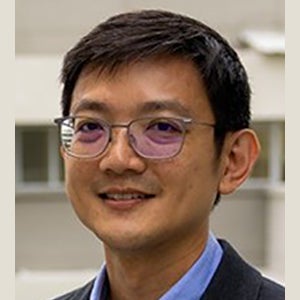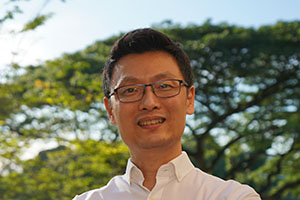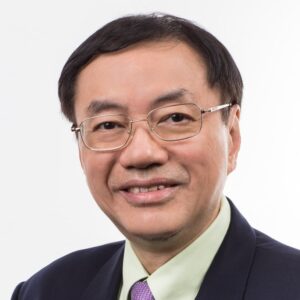
Kankana Mukhopadhyay* and Triston TAN
College of Alice & Peter Tan (CAPT). National University of Singapore (NUS)
Sub-Theme
Building Learning Relationships
Keywords
Student-faculty partnership, co-creation in teaching and learning, intentionality in learning relationships, informal teaching assistantship, equalising power dynamics
Category
Paper Presentation
The living-and-learning programme (LLP) of the College of Alice & Peter Tan (CAPT) is anchored to relationship building and shortening the student-teacher distance, thereby revealing what it means for students and faculty members in higher education to democratically engage with each other in both formal and informal learning contexts. In this paper, we will present a systematic reflection of a learning relationship built between a Fellow (faculty member in CAPT) and a student teaching assistant (TA) that enabled strengthening different outcomes of the course taught. Drawing from our experience of collaborating in three iterations of the same course, we will highlight how building learning relationships enabled unpacking the meanings of harnessing each other’s empowered positions and bridging the gap between students and the Fellows. These insights have been consolidated from carefully analysing the specific course content developed through the collaboration and students’ post-experience reflections. Themes of co-creation and intentionality emerged as indicative of achieving not only cognitive but affective outcomes as well.
This TA-ship was part of the College Seniors’ Programme (CSP) in CAPT, which provides informal teaching assistantship in the college courses as one of the ways that senior students (Year 3 and above) can fulfill their residency requirement in the college. One of CAPT’s important distinctive is to create a constructive and collaborative learning environment which positively affect students’ motivation and develop a sense of belonging (Weimer, 2013). As returning seniors, they are enabled to contribute to this learning environment of CAPT through participating in the CSP. The TA (second author) in this context served in the role for his Years 3 and 4 CSP, and an additional round in Year 4 (beyond his CSP requirement), for a senior seminar (SS) course taught by the Fellow (first author). The course aims for students to analyse and think critically about the construction and deconstruction of personal, relational, and collective identities. Importantly, the TA was also a student of this SS during his Year 2. Thus, his experience as a learner and thereafter as a TA created a hybrid culture of enhanced learning (Jonsson, 2020) by being involved as a co-creator of certain contents of the course, and teaching approaches. (Bovill, et al., 2011; Mihans, et al., 2008).
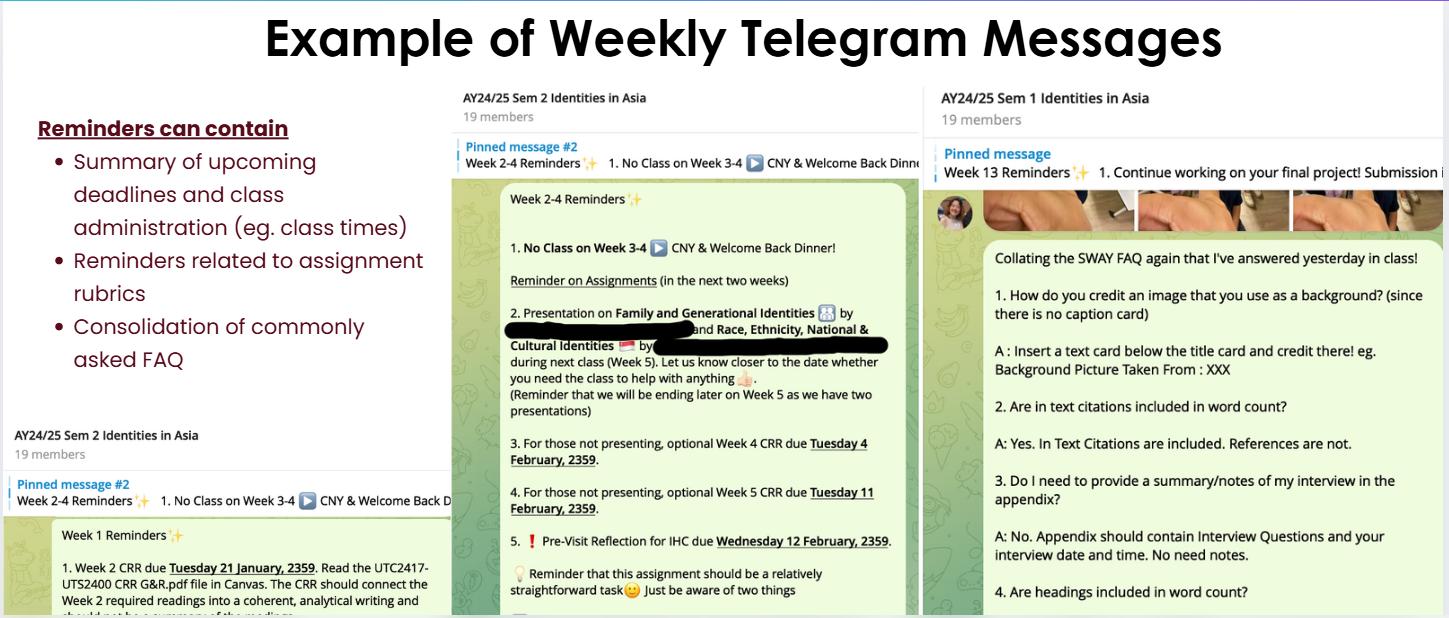
Systematically reflecting on our journey, we uncovered what it meant to acknowledge and work through the power hierarchies that are associated with seniority, subject-matter expertise, and pedagogical design (Cook-Sather & Des-Ogugua, 2019). For instance, we discussed the different assignment guides and grading rubrics, and other challenges related to the course. Our roles—grading instructor and non-grading TA—deconstructed the teacher-student dichotomy through recognition, reciprocity, and empowerment (Mukhopadhyay & Wong, 2023). Further, with open communication, mutual understanding of the course objectives and intended learning outcomes, the TA became a bridge between Fellow and the class members, creating a safe space for them to raise questions and mutual concerns (Figure 1).
.
Interestingly, this active engagement also led to empathy building, promoted by individual interactions such as frequent check-ins over meals and other social practices (Puckett & Felten, 2024).
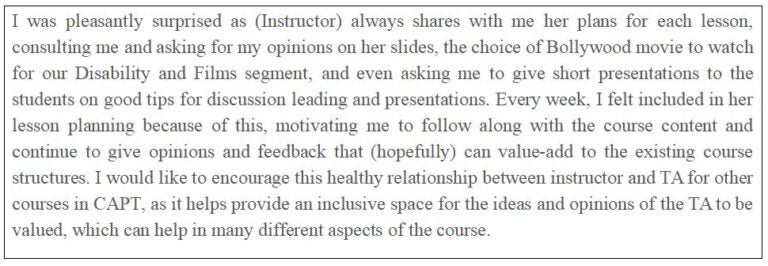
Using the evidence from co-creating informal course evaluation survey and the process of implementing student feedback in subsequent runs of the course, collaborating in assignment design to incorporate the use of AI in enhancing experiential learning experiences (Appendix A), and reflection essay by the TA (Figure 2), this paper presentation will demonstrate how each endeavour functioned as a trust-building exercise which strengthened the learning relationships and enabled mutual intellectual and personal growth.
.
Perspectives from a learner-centric TA-guide developed by the TA will be presented to establish the significance of ongoing nurturing of constructive student-faculty relationships in higher education.
.
.
References
Bovill, C., Cook-Sather, A., & Felten, P. (2011). Students as co-creators of teaching approaches, course design, and curricula: Implications for academic developers. International Journal for Academic Development, 16(2), 133-145. http://dx.doi.org/10.1080/1360144X.2011.568690
Cook-Sather, A. & Des-Ogugua, C. (2019). Lessons we still need to learn on creating more inclusive and responsive classrooms: Recommendations from one student–faculty partnership programme. International Journal of Inclusive Education, 23(6), 594-608. http://dx.doi.org/10.1080/13603116.2018.1441912
Jonsson, M. (2020). Five reasons why working as a student partner is energizing. International Journal for Students as Partners, 4(2), 150-154. https://doi.org/10.15173/ijsap.v4i2.4336
Mihans II, R. J., Long, D. T. & Felten, P. (2008). Power and expertise: Student-faculty collaboration in course design and the scholarship of teaching and learning. International Journal for the Scholarship of Teaching and Learning, 2(2). Article 16.
https://doi.org/10.20429/ijsotl.2008.020216
Mukhopadhyay, K. & Wong, S. F. (2023). A hybrid model of students-as-partners: A systematic exploration of co-created experiential learning in higher education. In Tambyah, S. K. (Ed.) Student growth and development in new higher education learning spaces: Student-centred learning in Singapore. Routledge.
Puckett, K., & Felten, P. (2024, December 13). “What works” when building educational relationships?” Center for Engaged Learning (blog), Elon University. December 13. https://www.centerforengagedlearning.org/what-works-when-building-educational-relationships/
Weimer, M. (2013). Learner-centered teaching: Five key changes to practice. (2nd Edition). Jossey-Bass.