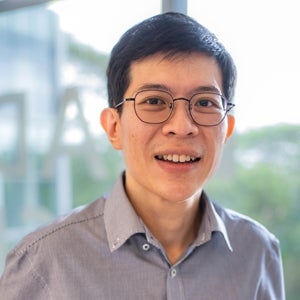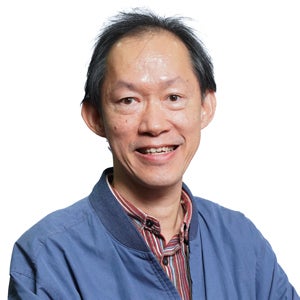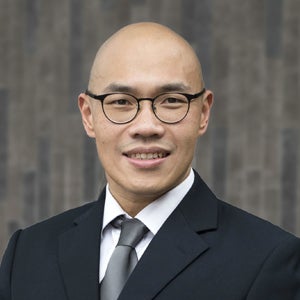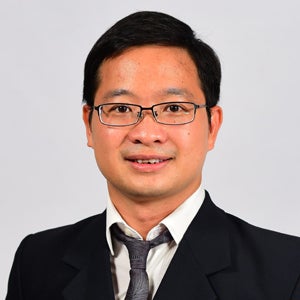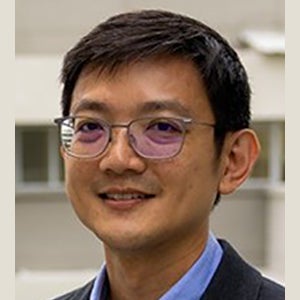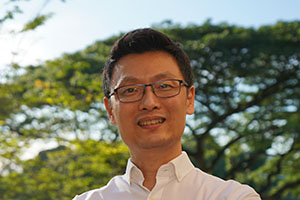

Olivier Patrick LEFEBVRE1,2,3,*, and Orlando GARCIA-RODRIGUEZ2
1Department of Civil and Environmental Engineering, College of Design and Engineering (CDE), National University of Singapore (NUS)
2NUS Environmental Research Institute
3NUS Teaching Academy
Sub-Theme
Building Learning Relationships
Keywords
Active collaborative learning, authentic learning environment, co-creation of knowledge, co-inquiry, personalised learning
Category
Paper Presentation
In Engaging Students as Partners in Learning and Teaching: a Guide for Faculty, Cook-Sather et al. (2014) argue that in a global and complex world, the value of higher education increasingly lies in creating spaces for meaningful student and faculty interactions. One such effective strategy, which can be scaled from individual (or course) level to programmatic and institutional initiatives consists in allowing students to co-create curriculum elements collaboratively alongside staff (Peseta et al., 2021), a concept which Peseta has coined as “co-inquiry”. An increasing number of case studies (e.g., Nygaard et al., 2013) illustrate how high-quality student-student and student-instructor partnerships can potentially foster engagement, motivation, learning, and well-being in higher education; however, Verwoord (2016) noted (i) a lack of geographic diversity (with most studies being primarily focused on Australia, the US and the UK) and (ii) overall a need for more case studies. In this context, we intend to present our efforts to foster deliberate meaningful relationships in an undergraduate course in the Asian setting of the National University of Singapore (NUS).
ESE2102 “Principles and Practice in Environmental Monitoring” is an undergraduate course offered to Year 1 environmental engineering students. It is part of the so-called “Engineering Principles and Practice” series of courses implemented as part of the engineering curriculum in 2017, under the impulse of former Dean of Engineering Professor Chua Kee Chaing, with the goal to “get students excited about the profession from the start” and “get a taste of what it is that engineers do from the word go”. Over many iterations of the course, the educators have merged the concepts of co-inquiry and that of authentic learning—defined as a pedagogical approach providing a meaningful context that immerses students in real-world, complex problems and tasks (Herrington et al., 2010)—to purposefully craft a course that fosters meaningful interactions between not only students and teachers but also in connection with the society (represented by the National Parks Board [NParks] and Singapore Botanic Gardens).
In ESE2102, the educators and students partner with NParks to monitor the water quality of the four lakes of the Singapore Botanic Gardens. The students outline their own strategy for monitoring target pollutants while identifying key challenges. Instead of being channeled through a pre-established set of experiments, students have a lot of freedom to define their own research questions, design suitable protocols, and then test their hypotheses by picking three out of seven possible lab experiments to suit their needs. As such, students co-create their learning experience collaboratively with the lecturers, teaching assistants, and NParks personnel. Students interact with each other in many meaningful ways too, by sharing information not only within their own group (ultimately leading to a peer-assessed component using rubrics) but also between groups (by sharing and comparing results), and by accessing data from past-years students, as well as passing over their own dataset to the future batches of students, installing a sense of legacy in ESE2102. By facilitating student-led agency rather than positioning themselves as those who empower the students, the educators foster a process where students naturally take control and responsibility of their own learning experience. In turn, this experience may reinforce the students’ affect for nature, hopefully leading to their individual growth, improvements in social skills, and more active citizenship (Hyde & Karney, 2001). In their feedback, the students not only praised the flexibility given by the approach, allowing them to tailor their own experience, but they also elaborated on the clarity and transparency of instructions, as well as timely feedback provided by the educators, which they regarded as essential points that rendered the experience genuine and meaningful.
References
Cook-Sather, A., Bovill, C., & Felten, P. (2014). Engaging students as partners in learning and teaching: A guide for faculty (1st ed.). Jossey-Bass. The Jossey-Bass Higher and Adult Education Series.
Herrington, J., Reeves, T. C., & Oliver, R. (2010). A guide to authentic e-learning. Routledge.
Hyde, R., & Karney, B. (2001). Environmental education research: Implications for engineering education. Journal of Engineering Education, 90(2), 267–275. https://doi.org/10.1002/j.2168-9830.2001.tb00602.x
Nygaard, C., Brand, S., Bartholomew, P., & Millard, L. (2013). Student engagement: Identity, motivation and community. Libri Publishing.
Peseta, T., Donoghue, A., Hifazat, S., Suresh, S., Beathe, A., Derbas, J., Mees, B., Suresh, S., Sugita, C., Mallawa Arachchi, T., Nguyen, E., Johnson, L., Clark, S., Ramegowda, R., Alford, J., Manthos, M., Jose, C., Caughey, E., Reed, V., & Ashcroft-Smith, M. (2021). Dancing with power in ‘We are the university: Students co-creating change’. Journal of University Teaching & Learning Practice, 18(7), 258–274. https://doi.org/10.53761/1.18.7.16
Verwoord, R. (2016). Engaging students as partners in learning and teaching: A guide for faculty. International Journal for Academic Development, 21(1), 86–89. https://doi.org/10.1080/1360144X.2016.1124967