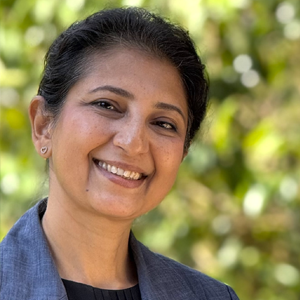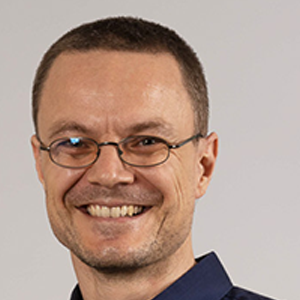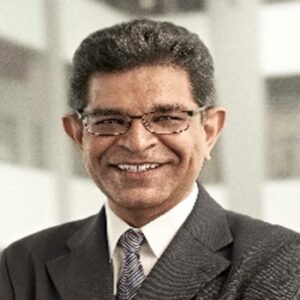

Alex MITCHELL1,6,*, Ahmed Hazyl Hilmy1, Daniel JEW2,6, Olivier LEFEBVRE3,6, Chris McMORRAN4,6, and ONG Ee Cheng5,6
1Department of Communications and New Media, Faculty of Arts and Social Sciences (FASS), National University of Singapore (NUS)
2College of Alice and Peter Tan (CAPT) and Department of History, FASS, NUS
3Department of Civil and Environmental Engineering, College of Design and Engineering (CDE), NUS
4Department of Japanese Studies, FASS, NUS
5Department of Economics, FASS, NUS
6NUS Teaching Academy
Sub-Theme
Others
Keywords
Play in education, motivations for using play, perceptions of play, barriers to play, teaching strategies
Category
Paper Presentation
Play is often recognised as an important part of early childhood education but tends to be underutilised and devalued in higher education. This is somewhat puzzling, as play has been found to cultivate relational safety and a warm classroom environment, remove barriers to learning, and awaken students’ positive affect and motivation (Forbes, 2021). Anecdotal evidence suggests that at NUS, students see no space for play in their undergraduate education, which aligns with observations at other educational institutions (Wallin et al., 2021). Despite this, several NUS faculty members have been experimenting with playful approaches to teaching and learning, which questions the perception that there is no space for play at NUS.
This raises several questions:
- How do NUS faculty members view play and learning?
- What barriers, perceived or actual, do they experience in incorporating play in their teaching?
- What are some ways to better make use of play in our teaching?
To address these questions, we conducted semi-structured interviews with 10 NUS faculty members who are currently using or plan to use play in their teaching. Participants were recruited through word-of-mouth and snowball sampling. Interviews were audio-recorded and transcribed, then coded for emergent themes, with a focus on specific obstacles that participants face and the strategies they use to overcome these obstacles.
Preliminary analysis identified four key insights: (i) a range of motivations across participants; (ii) barriers in the form of lack of time both in the classroom and to develop play-based approaches; (iii) opportunities for play in some courses such as interdisciplinary courses; (iv) a tension perceived by participants between play and being “serious” about education.
Participants have a range of motivations for implementing play-based approaches. For many, play is seen as a way to increase student motivation and engagement. Some view it as helping students make links between “content” and “real-world” concerns. Role-play is perceived as effective at building empathy. Play is also seen as a means for connecting with students, particularly freshmen, who are less academically-inclined.
Participants feel the greatest barrier to adopting play-based pedagogical approaches is time. By this, they primarily mean curriculum time: participants feel that including play may come at the cost of missing out on required content. They are also concerned about the time required to learn about and develop effective play-based approaches.
Participants see some courses, such as the College of Humanities and Sciences (CHS) interdisciplinary courses, as an opportunity to experiment with play-based approaches, as there are fewer restrictions on course content. Given the focus on inculcating an interdisciplinary mindset versus covering content, these courses offer more room to explore new teaching and learning strategies. The perception that interdisciplinary courses provide more flexibility to explore the use of play in teaching suggests a possible solution to the above-mentioned concern about curriculum time as a barrier to using play in education.
Finally, some participants emphasise that despite using play, they are serious about education. This highlights the notion that play is something that is viewed as not “serious”. Interestingly, these same participants see value in play and use play as part of their teaching. The tension here between play as not serious and education as serious, and how faculty members negotiate this tension, is worth exploring.
These preliminary findings provide a starting point to develop approaches to overcome obstacles to play and empower faculty members to incorporate play in their teaching. This project will continue exploring these questions through further interviews with faculty members and focus groups and/or interviews with students. The broader goal is to move closer to a vision of what can be considered a “playful university” (James, 2019; Nørgård, 2021).
References
Forbes, L. K. (2021). The process of playful learning in higher education: A phenomenological study. Journal of Teaching and Learning, 15(1), 57–73. https://.doi.org/10.22329/jtl.v15i1.6515
James, A. (2019). Making a case for the playful university. In The Power of Play in Higher Education: Creativity in Tertiary Learning (pp. 1–19). Springer.
Nørgård, R. T. (2021). Philosophy for the playful university – Towards a theoretical foundation for playful higher education. In S. S. E. Bengtsen, S. Robinson, & W. Shumar (Eds.), The University Becoming: Perspectives from Philosophy and Social Theory (pp. 141–156). Springer International Publishing. https://doi.org/10.1007/978-3-030-69628-3_10
Wallin, P., Mariussen, K. L., Mogstad, H., & Sønderaal, M. (2021). A dialog on reclaiming higher education as a space for play. The Journal of Play in Adulthood, 3(2), Article 2. https://doi.org/10.5920/jpa.860