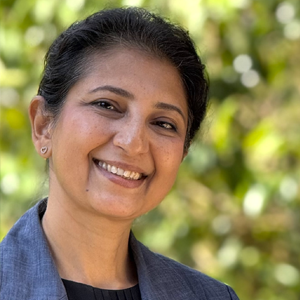

Vivek Sundar Magesh
Department of Information Systems and Analytics, School of Computing (SOC), National University of Singapore (NUS)
Sub-Theme
Building Learning Relationships
Keywords
Rapport, large classes, humour, participation
Category
Lightning Talks
The word “rapport” generally refers to harmony in a relationship. Jorgenson (1992) refers to “rapport” as a relationship-oriented concept that captures the essence of what is experienced jointly in a relationship. Past research has indicated that instructor-student rapport positively contributes to student learning (Frisby & Martin, 2010). Various scholars have provided ideas and strategies to develop this rapport in a classroom setting (for example, [Frisby, 2018]).
Building such a rapport is a challenge in large classes. Large classes have hundreds of students. In such cases, it becomes impossible for the instructor to develop a close connection with the students. In my experience, it is not easy to even know more than a few names of the students. In such a large setting, the course can become mechanical. In this talk, I will share a few strategies that I have used to build rapport among my students in a very large interdisciplinary course that I teach.
Firstly, when the semester starts, I send a warm welcome email to the students along with information on the course policies and learning outcomes. This helps reduce anxiety among students about the potential nature of the course. Students generally want to know about assessments, lecture modes, test dates, and other relevant information. Presenting them with this information in the email can significantly improve their experience of the course.
Secondly, within the class, I provide students with the option to meet and discuss any course-related difficulties with me immediately after class. This tends to be reassuring for students if they do not fully follow the material covered in class. It also provides an opportunity for those interested to discuss course-related matters personally with me, the instructor.
Thirdly, drawing inspiration from past research on learning (Ambrose et al., 2010; Bransford & Johnson, 1972; Resnick, 1983), I attempt to activate students’ prior relevant knowledge, both within and outside my course, when presenting a new topic. This helps students better assimilate their learning by building on the foundation of what they already know. Thus, students feel part of the learning process, and learning happens actively.
Fourthly, I use humour to connect with my students. Humour tends to break boundaries and lighten the atmosphere, creating a collegial situation for learning.
Fifthly, I utilise tools to enhance participation both in and outside the classroom. In class, I use tools like Poll Everywhere to allow students to express their thoughts. I allow them to do this anonymously. This way, they can express themselves freely and clarify any questions they may have. Outside the classroom, I utilise the discussion forums on Canvas to engage with students. Students use the forum to ask course-related questions and engage in insightful discussions. Both Poll Everywhere and Canvas discussion forums also encourage interactions among students. In my experience, these strategies promote rapport among students and between students and me.
These strategies are generally scalable to very large classes. They can potentially help develop rapport between the instructor and students, as well as among students themselves, thereby enhancing the student experience and promoting student learning in turn.
References
Ambrose, S. A., Bridges, M. W., DiPietro, M., Lovett, M. C., & Norman, M. K. (2010). How learning works: Seven research-based principles for smart teaching. John Wiley & Sons.
Bransford, J. D., & Johnson, M. K. (1972). Contextual prerequisites for understanding: Some investigations of comprehension and recall. Journal of verbal learning and verbal behavior, 11(6), 717-726. https://psycnet.apa.org/doi/10.1016/S0022-5371(72)80006-9
Frisby, B. (2018). On rapport: Connecting with students. Greater Faculties: A Review of Teaching and Learning, 2(1), 3. https://uknowledge.uky.edu/greaterfaculties/vol2/iss1/3/
Frisby, B. N., & Martin, M. M. (2010). Instructor–student and student–student rapport in the classroom. Communication Education, 59(2), 146-164. https://doi.org/10.1080/03634520903564362
Jorgenson, J. (1992). Communication, rapport, and the interview: A social perspective. Communication Theory, 2(2), 148-156. https://doi.org/10.1111/j.1468-2885.1992.tb00034.x
Resnick, L. B. (1983). Mathematics and science learning: A new conception. Science, 220(4596), 477-478. https://psycnet.apa.org/doi/10.1126/science.220.4596.477