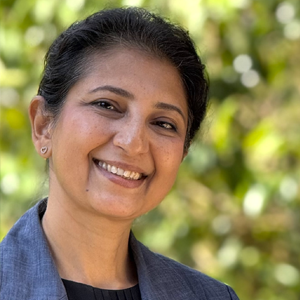

Tabitha LEE En Ting
Science Dean’s Office, Faculty of Science (FoS), National University of Singapore (NUS)
Sub-Theme
Building Learning Relationships
Keywords
Student care, attendance taking, classroom activity, icebreakers
Category
Lightning Talks
Part of an educator’s job is to care for students. Research shows that student’s perception of care results in higher student engagement (Roorda et al., 2017; Thornberg et al., 2022), higher student perception of their capabilities (Reppy & Larwin, 2020) and less classroom conflicts (Meyers et al., 2006). However, when teachers are already overworked, and face-to-face time with the students is limited, it becomes a challenge to learn student names, let alone show care. This problem is further compounded by large class sizes or online teaching (Meyers, 2009).
At the same time, attendance taking has also become optional in higher education. Some teachers flash a QR code to take attendance, and others do not keep track of their students, putting the onus on the students to turn up for class. This takes away another precious opportunity for teachers to interact with their students.
In this talk, I introduce what I have been doing in HSI1000 over four semesters of teaching that is simple but effective in student perception of care. It combines attendance taking with a simple ice breaker question that changes every class, and I call this “Attendance Taking 2.0”. By clothing this icebreaker in the form of attendance taking, students view it less as an ‘awkward attempt to get to know them’ and more as a normal part of class. At the same time, by attaching an icebreaker question to attendance taking, it transforms the roll call into a personal exchange between instructor and the student, providing the opportunity, albeit short, for care to be shown.
Attendance Taking 2.0 is done when the students enter the classroom and depending on the question, can be as fast as five seconds per student, or up to one minute. The questions can range from simple questions such as ‘What is your major?’ to thought-provoking questions such as ‘What is something that you are proud of?’. Furthermore, these questions can be easily tweaked to match the time of the semester (first lesson after recess week ‘How rested do you feel?’) or to match the theme of the lesson (‘How dangerous do you feel climate change is?’ when the lesson is about climate change). The answers can further be collated, creating a database for the instructor to remember the students by.
Some of the benefits of this form of attendance taking is that it is incredibly simple to implement. Moreover, it ensures that the instructor gets to interact one-on-one with all the students in class, not just the vocal ones. It also helps the instructor to learn students’ names more effectively by associating their name with an interesting icebreaker answer, which further communicates care (Cooper et al., 2017). Most importantly, the students appreciate the effort and feel cared for, as seen from a sample student feedback below.
“… One thing I especially appreciated was her unique approach to attendance–taking. Instead of simply calling names, she’d ask us a reflective or personal question each time—things like “What was something interesting to you this week?”, “Why are you in your current major?”, or “What’s your hobby? They sparked mini conversations, made us smile, and reminded us that we’re more than just students grinding through deadlines. It showed that she genuinely cared about who we were beyond the course content.”
My hope is for fellow educators to give this form of attendance taking a try and to cultivate more caring classrooms for our students to thrive in.
References
Cooper, K. M., Haney, B., Krieg, A., & Brownell, S. E. (2017). What’s in a name? The importance of students perceiving that an instructor knows their names in a high-enrollment biology classroom. CBE—Life Sciences Education, 16(1), ar8. https://doi.org/10.1187/cbe.16-08-0265
Meyers, S. A. (2009). Do your students care whether you care about them? College Teaching, 57(4), 205–210. https://doi.org/10.1080/87567550903218620
Meyers, S. A., Bender, J., Hill, E. K., & Thomas, S. Y. (2006). How do faculty experience and respond to classroom conflict? International Journal of Teaching and Learning in Higher Education, 18(3), 180–187. https://www.isetl.org/ijtlhe/pdf/IJTLHE115.pdf
Reppy, D., & Larwin, K. H. (2020). The association between perception of caring and intrinsic motivation: A study of urban middle school students. Journal of Education, 200(1), 48–61. https://doi.org/10.1177/0022057419875123
Roorda, D., Jak, S., Zee, M., Oort, F., & Koomen, H. (2017). Affective teacher–student relationships and students’ engagement and achievement: A meta-analytic update and test of the mediating role of engagement. School Psychology Review, 46, 1–23. https://doi.org/10.17105/SPR-2017-0035.V46-3
Thornberg, R., Forsberg ,Camilla, Hammar Chiriac ,Eva, & and Bjereld, Y. (2022). Teacher–student relationship quality and student engagement: A sequential explanatory mixed-methods study. Research Papers in Education, 37(6), 840–859. https://doi.org/10.1080/02671522.2020.1864772