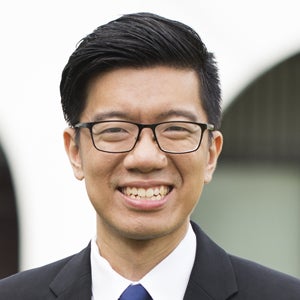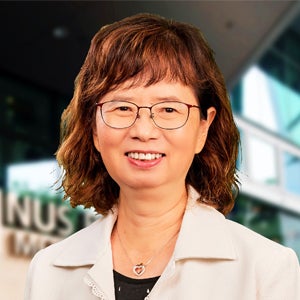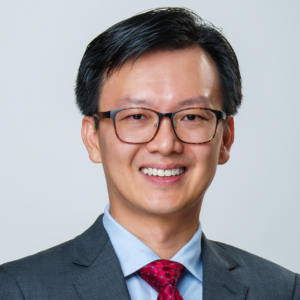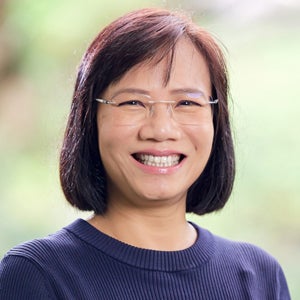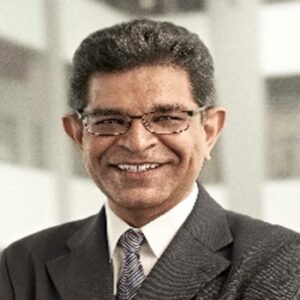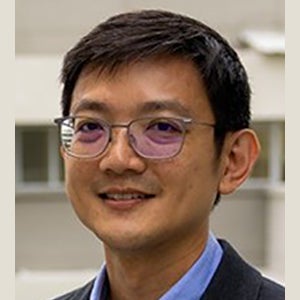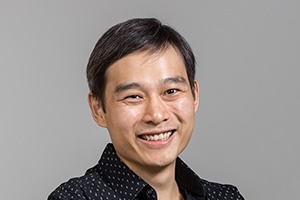
Matthew NG Hui Chieh and Patricia LORENZ
Ridge View Residential College (RVRC), National University of Singapore (NUS)
Sub-Theme
Building Learning Relationships
Keywords
Teaching Assistant, collaboration, SFI, experiential learning
Category
Lightning Talks
This Lighting Talk in the sub-theme of “Building Learning Relationships” examines how developing strong relationships between educators and students facilitates greater engagement and deeper academic learning. Strong relationships between educators and students are fundamental to effective teaching and holistic development. The cultivation of trust, mutual respect, and empathy between educators and students significantly enhances engagement and strengthens pedagogical effectiveness. Prior research indicates that educators perceived as approachable by students tend to inspire greater resilience, participation, and interest in the subject matter (Cox et al., 2010; Hagenauer et al., 2022; Xie & Derakhshan, 2021). While this presentation builds upon a well-researched pedagogical aspect, it offers a more in-depth examination of its particular relevance for short, intensive courses, such as those offered under the Southeast Asia Friendship Initiative (SFI). SFI courses are General Education (GE) courses with a local as well as an overseas component, designed to provide enrolled students with a holistic education, while exposing them to disciplines and perspectives beyond their core areas of
specialisation within their majors. These overseas courses operate on a compressed timeline, transitioning rapidly from the local classroom-based sessions to the overseas experiential field trips. Some SFI courses, such as RVN2002 Wild Asia: conservation matters, take students out of their physical, and sometimes mental comfort zones, as they navigate both unfamiliar terrain, unexperienced environments, and novel academic demands. Additionally, within such a short timeframe, students might find it challenging to establish a meaningful connection with the course content in the limited preparatory period. However, by fostering strong relationships between educators and students, learning can be scaffolded effectively and students can be guided to critically reflect on the relevance of their experiential engagements to industry-specific applications or broader interdisciplinary frameworks.
Teaching Assistants (TAs) are in a unique position to foster strong connections with participating students. As peers, with similar ages and academic experiences, TAs are often perceived as more relatable and accessible than teaching staff, hence serving as crucial mediators between faculty and students. This enables TAs to offer sustained guidance, clarify academic expectations, and respond adaptively to students’ ongoing cognitive and emotional needs. This is particularly significant within the context of SFI courses, as their presence throughout both the preparatory and field-based components of the course allows them to provide continuous support to both faculty and students. Moreover, the less hierarchical dynamic between students and TAs can encourage more open dialogue, enabling TAs to cultivate a sense of trust and psychological safety that is essential to promote self-directed learning and critical reflection. Feedback received from students affirmed this, with one participant noting: “Whenever we were curious about something we saw, like insects or birds, having someone able to answer our questions on the spot in real time felt really refreshing and made me feel actually connected with nature as I could learn about something even though it was not within my domain of expertise.”
In field settings where students may feel overwhelmed or even disoriented by the unfamiliar environments, the personal and emotional support provided by TAs becomes vital in reestablishing a sense of security and belonging. By building rapport and serving as academic and emotional anchors, TAs essentially become a relatable extension of the teaching team and thus, play a critical role in deepening student engagement with course content and facilitating the translation of experiential learning into meaningful academic insights. The collaborative efforts of faculty, TAs, and students collectively contribute to a more enriching and impactful learning experience.
References
Healey, M., Bovill, C., & Jenkins, A. 2015. Students as partners in learning. In Lea, J. (Ed), Enhancing Learning and Teaching in Higher Education: Engaging with the Dimensions of Practice (pp. 141–63). McGraw Hill/Open University Press.
Lorenz, P., & Guan, Y. (2023). Engaging students in cross-disciplinary module design: a case study on the co-creation of a sustainability module in Singapore. Journal of Applied Learning and Teaching, 6(1), 1-16. https://doi.org/10.37074/jalt.2023.6.1.ss6
Matthews, K. E., Cook-Sather, A., & Healey, M. (2018). Connecting learning, teaching, and research through student–staff partnerships: Toward universities as egalitarian learning communities. In V, Tong., A Standen., & M Sotiriou (Eds.), Shaping higher education with students: ways to connect research and teaching, (pp. 23-29). UCL Press, http://www.jstor.com/stable/j.ctt21c4tcm.7
Nel, L. (2017). Students as collaborators in creating meaningful learning experiences in technology-enhanced classrooms: An engaged scholarship approach. British Journal of Educational Technology, 48(5), 1131-1142. https://doi.org/10.1111/bjet.12549