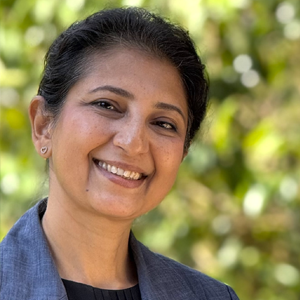

Sin Rou LOO1, David MERRY2,*, and Yi Xin TJAN3
1NUS College, and Department of Psychology, Faculty of Arts and Social Sciences (FASS), National University of Singapore (NUS)
2NUS College, and Department of Philosophy (Courtesy), FASS, NUS
3NUS College, and Department of Philosophy, FASS, NUS
Sub-Theme
Others
Keywords
Achievement emotions, academic writing, pride, motivation
Category
Poster Presentation
Background
Students who feel proud of their work learn more (Pekrun et al., 2017), especially if their pride focuses on specific and unstable aspects of their performance, such as effort (authentic pride), rather than general and stable attributes of the self, such as brilliance (hubristic pride) (Tracy & Robins, 2004; Weidman et al., 2016). However, the connection between pride and achievement is complex: low pride can motivate students to change unsuccessful strategies (Weidman et al., 2016). Pride is caused not only by achievement, but also by possessions, affiliations, and interpersonal relationships (Ahuvia et al., 2018; Tracy & Robins, 2007). Given these complexities, there is a need for qualitative studies examining pride in specific educational settings, such as writing assignments.
Methodology and Findings
Two undergraduate research assistants interviewed 37 undergraduates about their emotions towards academic writing. The research team then conducted a thematic analysis of the results. Several themes clarified the connection between writing achievement and pride.
Defining Achievement
We confirmed a central role for achievement. However, participants defined achievement differently. Some centered grades (“it’s mostly in association with grades”). Others felt pride in effort (“I spent a lot of time thinking about it”), exercise of ability, (“you use your brain to a level that you maybe did not imagine that you could”), originality, (“you really have done [something] no one has”), personal growth (“the feeling of like having improved”), and personal expression (“clearly express my opinion in writing”).
Essays as Possessions
Participants took pride in their essays not only as achievements, but as possessions. Essays were “an object that you can interact with and [are] able to recognize as your own”, and bestowed “a sense of ownership, because you made it, and then you will feel proud.” Like other possessions (Ahuvia et al., 2018), essays offer the development of personal identity (“this is my genuine perspective and opinion”), affiliation (“something unique you can talk about”), and social status (“gain a piece of writing that I have confidence in putting on my resume”).
The Dark Side of Authentic Pride
Although pride led to increased engagement (“these positive emotions really motivates me”), confidence (“validation […] acts as a confidence booster”), and willingness to experiment (“explore more directions”), responses to pride could also lead to challenges in learning such as reduced receptiveness to feedback (“if I feel really good about my essay, then I just don’t care about what can be improved”) and fear of disappointment (“then there was this fear, right, that what if I was overestimating myself”).
Significance
Pekrun et al. (2017) propose reciprocal causation between achievement and pride. Our results suggest that this model partially captures the relationship between pride and achievement. However, our research highlights neglected aspects, namely: students’ sense of ownership, their active role in defining achievement, and the negative impacts of pride on learning. Our research also suggests promising future directions, such as developing interventions aimed at enhancing student ownership of writing and exploring pride in ownership of other assignments, such as computer science projects.
References
Ahuvia, A., Garg, N., Batra, R., McFerran, B., & Lambert de Diesbach, P. B. (2018). Pride of ownership: an identity-based model. Journal of the Association for Consumer Research, 3(2), 216-228. https://doi.org/10.1086/697076
Pekrun, R., Lichtenfeld, S., Marsh, H. W., Murayama, K., & Goetz, T. (2017). Achievement emotions and academic performance: Longitudinal models of reciprocal effects. Child Development, 88(5), 1653-1670. https://doi.org/10.1111/cdev.12704
Tracy, J. L., & Robins, R. W. (2004). Putting the self into self-conscious emotions: A theoretical model. Psychological Inquiry, 15(2), 103-125. https://doi.org/10.1207/s15327965pli1502_01
Tracy, J. L., & Robins, R. W. (2007). The psychological structure of pride: A tale of two facets. Journal of Personality and Social Psychology, 92(3), 506-525. https://doi.org/10.1037/0022-3514.92.3.506
Weidman, A. C., Tracy, J. L., & Elliot, A. J. (2016). The benefits of following your pride: Authentic pride promotes achievement. Journal of Personality, 84(5), 607-622. https://doi.org/10.1111/jopy.12184