
DU Hongjian
Department of Civil and Environmental Engineering, College of Design and Engineering (CDE), National University of Singapore (NUS)
Sub-Theme
Building Learning Relationships
Keywords
Adult learner, engineering education, self-generated assessment, work experience, relevance
Category
Paper Presentation
Introduction
Adult learners bring valuable real-world experience into the classroom, yet conventional assessments often fail to engage their professional insights. At the National University of Singapore (NUS), I have worked extensively with adult learners in the MSc coursework programme. In earlier work, I introduced a scenario-based, student-generated question-and-answer method, where learners formulated questions based on their workplaces or daily life (Du & Tay, 2022; Du & Tay, 2024). This approach led to marked improvements in engagement and conceptual understanding. Motivated by these results, I adopted the approach for CE5604 “Advanced Concrete Technology”, a postgraduate course with many working professionals.
Methodology
I designed a student self-generated assignment to promote applied learning grounded in real-world experiences. Learners were asked to identify visible cracks in concrete structures observed in their daily environment—be in the workplace, home, or surrounding buildings. Working in pairs, each team acted as a concrete consultant: analysing the cracks, diagnosing likely causes (e.g., shrinkage, corrosion, settlement), and proposing engineering mitigation strategies. The assignment culminated in a technical report that simulated real-world consulting practice. To evaluate learning outcomes, I analysed student performance on a final exam question aligned with the content of the crack forensics assignment. Results from the 2025 cohort (which completed the new assignment) were compared with the 2024 cohort (which did not). A post-assignment survey was also conducted to capture students’ perceptions of the learning experience, including its impact on their understanding, motivation, and ability to apply course concepts in practice.
Impact on Learning Outcomes
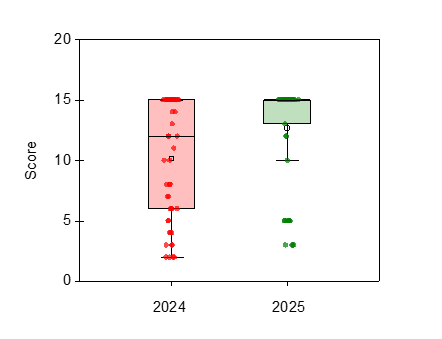
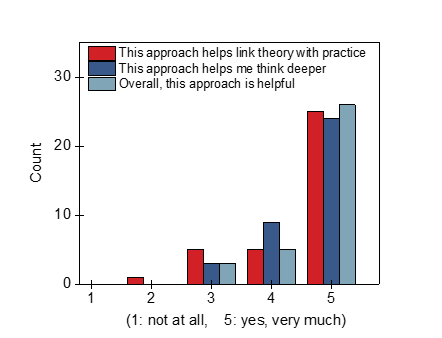
The intervention cohort (2025) outperformed the previous year (2024) in exams with average score rising from 10.2 to 12.8 and standard deviation narrowing from 4.9 to 4.2 (as shown in Figure 1). Figure 2 indicates that over 90% of students agreed that the method enhanced their ability to apply knowledge to real-life contexts. Reflections as shown in Table 1 noted that the assignment can help their learning in many aspects including understanding, critical thinking and connection.
Student reflections on the assessment and lecturer’s takeaway
| Theme | Selected student reflections | Lecture’s takeaway |
| Applied Learning | “It really helps to apply lecture knowledge practically, which is more effective.” “This approach is really good… it truly got me thinking about cracks.” | Students appreciated the opportunity to apply theoretical knowledge in real-life scenarios, reinforcing the effectiveness of authentic, field-based tasks. |
| Enhanced Understanding | “I understand concrete deeper because of the way Prof. designed this module.” “I have developed a greater interest in concrete structures and the behavior of their internal ingredients.” | Reflections confirm that this method fosters deeper understanding and long-term interest in the subject. |
| Critical Thinking | “We can explore our curiosity rather than find the answer to given questions.” “I like how the assignment makes me think but isn’t too tedious.” | The approach promotes independent thinking, curiosity, and ownership of learning—key objectives of graduate education. |
| High Satisfaction | “Very very good.” “Definitely recommend to continue this approach.” | Overall satisfaction was high, affirming the value of this method for future cohorts and modules. |
| Feedback for Improvement | “Maybe can set question on overall concrete degradation, not just cracking.” “Students without site access may struggle.” | A valuable suggestion indicating a need for slight redesign to broaden the scope of acceptable topics and reduce entry barriers. |
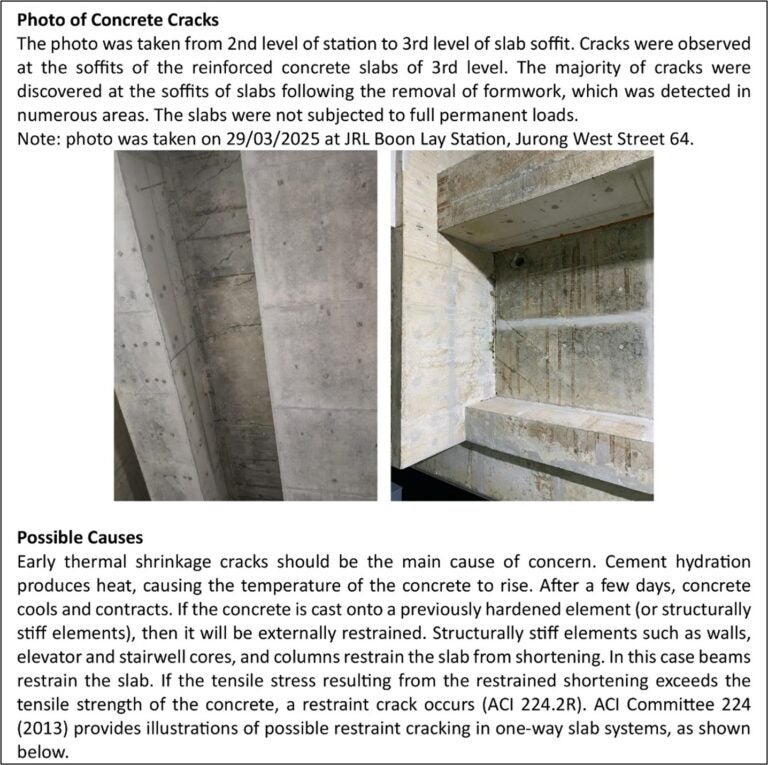
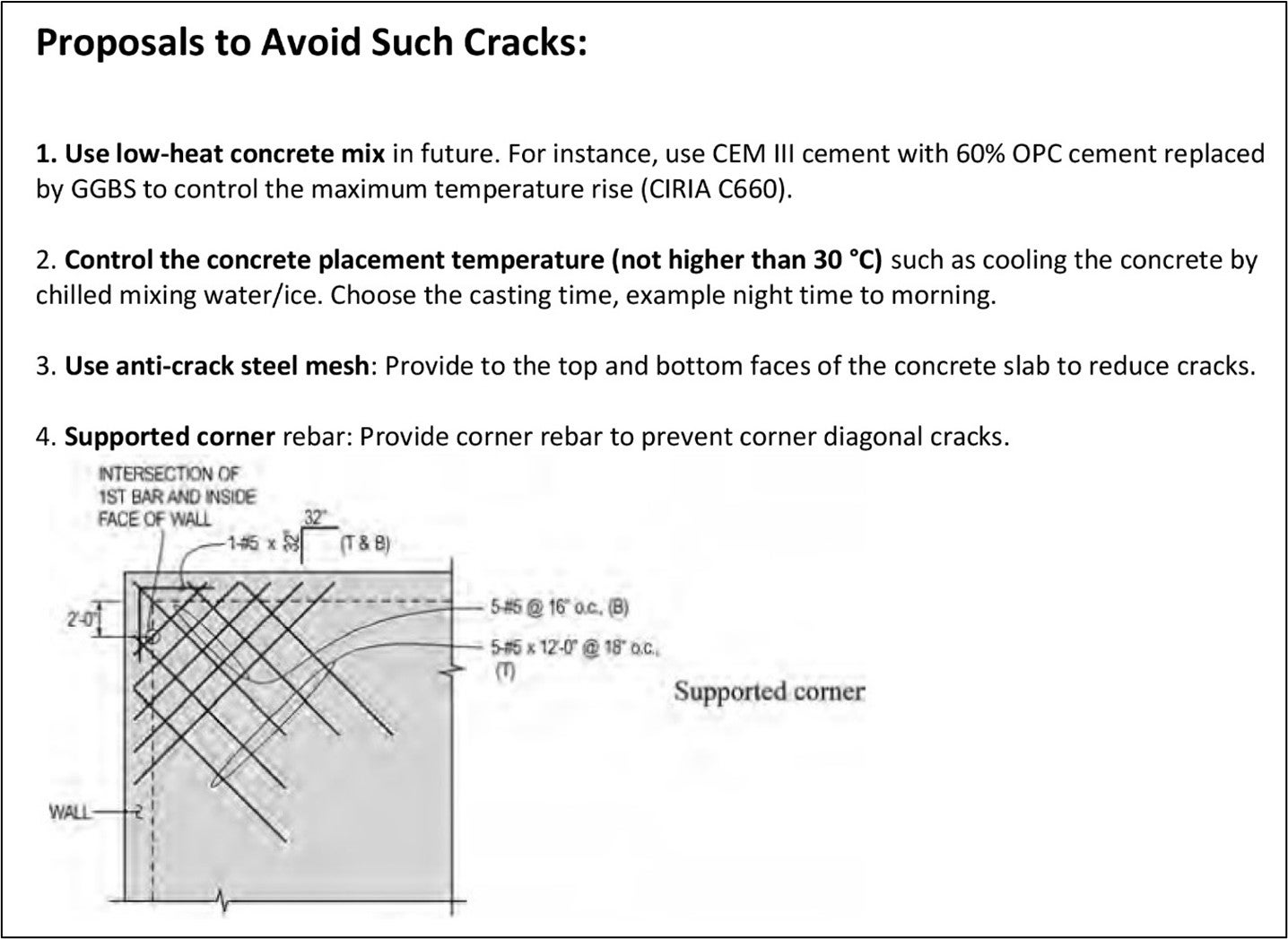
Selected reports (Figure 3 and Figure 4) demonstrated high levels of technical reasoning, accurate diagnosis of defects, and practical mitigation strategies grounded in local practice. One student, for example, linked stairwell cracking to poor curing and restraint during early age drying and suggested time-based shrinkage control and better construction sequencing.
Conclusion
Self-generated assessment is a useful method to engage adult learners by leveraging their professional experience. This approach promotes deeper understanding through applied learning and strengthens educator–learner relationships by validating workplace knowledge. The method is scalable and offers a robust model for integrating adult learners’ expertise into engineering education.
References
Du H. J., & Tay, S. E. R. (2022). Using scenario-based student-generated questions to improve the learning of engineering mechanics: A case study in civil engineering [Paper presentation]. In Higher Education Campus Conference (HECC) 2022, 7-8 December, National University of Singapore (pp. 84-88). https://ctlt.nus.edu.sg/wp-content/uploads/2024/10/ebooklet-i.pdf
Du, H., & Tay, S. E. R. (2024). Leveraging adult learners’ professional experience through scenario-based student-generated questions and answers in engineering mechanics [Paper presentation]. In Higher Education Conference in Singapore (HECS) 2024, 3 December, National University of Singapore. https://blog.nus.edu.sg/hecs/hecs2024-hdu-sertay/