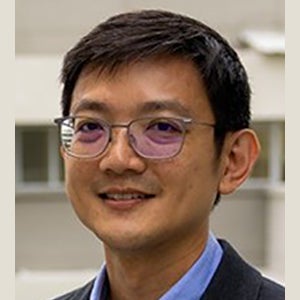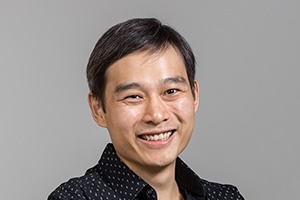

Kenneth CHONG1,2,*, HAN Qi1,2, CHUA David3
1Department of Social Work, National University of Singapore (NUS)
2GEN2060 Team
3Office of Data and Intelligence, NUS
Sub-Theme
Building Technological and Community Relationships
Keywords
Befriending, service-learning, community relationships, social cohesion
Category
Paper Presentation
Introduction
The National University of Singapore (NUS) introduced “Communities and Engagement” (C&E) as its sixth Common Curriculum Pillar in 2021, integrating service and learning to cultivate student engagement with broader societal issues through volunteer action, supported by structured training and guided reflexive learning. In this paper, we investigate the role of two service-learning befriending courses in fostering social cohesion between students and the individuals and families they serve.
GEN2060 “Reconnect SeniorsSG” is a partnership between NUS and the Agency for Integrated Care (AIC). Students serve as befrienders for seniors facing social isolation. GEN2070 “Community Link (ComLink) Befrienders” is a collaboration between NUS and the Ministry of Social and Family Development (MSF). Students serve as befrienders to journey with vulnerable families with young children through home visits and community interactions towards stability, self-reliance, and social mobility. While GEN2060 and GEN2070 serve different populations, the underlying idea is similar—the deployment of student volunteers to cultivate supportive relationships that improve the well-being of service recipients and broaden the learning outcomes of the students themselves.
Amidst Singapore’s multicultural society, strengthening social cohesion remains an ongoing national priority, as evidenced by our refreshed social compact (Wong, 2024). The Organisation for Economic Co-operation and Development (OECD, 2011) defines social cohesion as a characteristic of a “well-ordered society” and highlights three key components: social inclusion, social capital, and social mobility. One pathway to cohesion is to provide opportunities for meaningful interactions across differences (Orazani et al., 2023). Befriending, defined as the development of emotionally supportive relationships between volunteers and service recipients (Balaam, 2015), provides such a mechanism. Through the contact hypothesis (Paluck et al., 2019), interactions between student volunteers and service recipients can build interpersonal relationships that reduce social distance and lay the foundations for cohesion between both parties.
Recent meta-analyses (e.g., Chen & Schulz, 2016) have highlighted that service-learning, broadly conceived, has positive effects on students’ understanding of social issues, personal insight, and skills development. While these outcomes can be associated with broader goals of enhancing cohesion, the specific role of befriending as a mechanism for fostering relational ties in Singapore remains under-explored. GEN2060 and GEN2070 offer a unique context in which students develop interpersonal relationships with service recipients, making them ideal for studying these effects.
This study adopted a quantitative approach. Key themes of social cohesion were drawn from students’ final reflection assignments and final portfolio videos with the use of a Large Language Model (LLM). Findings reveal that a high proportion of student befrienders get to witness emotions and struggles from their service recipients, and/or engage in shared activities with them. This predisposes them toward measurable aspects of social cohesion.
The outcome suggests that service-learning befriending can be a viable pedagogical and social intervention for promoting cohesion through student learning in Singapore. The study contributes to the relatively under-explored area of how service-learning impacts cohesion in multicultural urban settings. The findings have implications for curriculum design, such as the intentional integration of sustained interpersonal contact, structured reflection, and empathy-building exercises into pedagogy. For community partners, they highlight the value of reciprocal, relational engagement where students learn not only about, but also with, service recipients. More broadly, the study underscores how university-wide service-learning initiatives can nurture resilience and strengthen the social fabric by equipping students with the dispositions needed to navigate diversity and complexity in society.
Acknowledgements
The GEN2060 and GEN2070 Tutor Teams are presently hosted by the Undergraduate Education Unit of the Office of the Provost, NUS. We acknowledge the support and guidance of Ms Ong Mui Hong, Director of Operations and Planning (PVO), and Professor Peter Ho, Vice Provost (Undergraduate Studies & Technology-enhanced Learning). We also acknowledge the support and guidance of Associate Professor Lee Geok Ling, Head of the Department of Social Work.
References
Balaam, M-C. (2015). A concept analysis of befriending. Journal of Advanced Nursing: Leading Global Nursing Research, 71(1), 24-34. https://doi.org/10.1111/jan.12553
Chan, J., To, H-P., & Chan, E. (2006). Reconsidering social cohesion: Developing a definition and analytical framework for empirical research. Social Indicators Research, 75, 273-302. https://doi.org/10.1007/s11205-005-2118-1
Organisation for Economic Co-operation and Development (OECD). (2011). Perspectives on global development 2012: Social cohesion in a shifting world. OECD Publishing. https://doi.org/10.1787/persp_glob_dev-2012-en.
Orazani, S. N., Reynolds, K. J., & Osborne, H. (2023). What works and why in interventions to strengthen social cohesion: A systematic review. Journal of Applied Social Psychology, 53(10), 938-995. https://doi.org/10.1111/jasp.12990
Paluck, E. L., Green, S. A., & Green, D. P. (2019). The contact hypothesis re-evaluated. Behavioural Public Policy, 3(2), 129-158. https://doi.org/10.1017/bpp.2018.25
Wong, L. (2024). Dialogue with Prime Minister Lawrence Wong [Speech transcript]. IPS Commons. https://ipscommons.sg/dialogue-with-prime-minister-lawrence-wong/