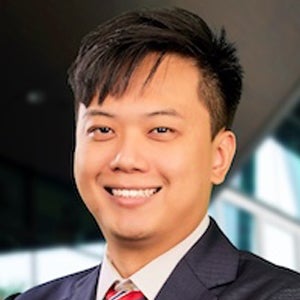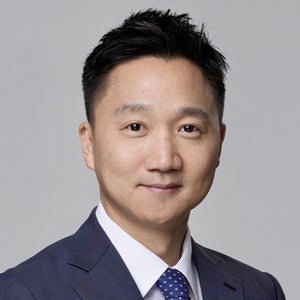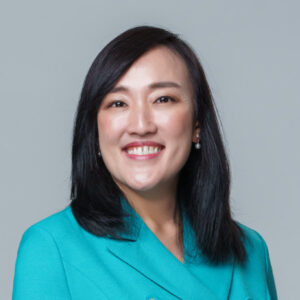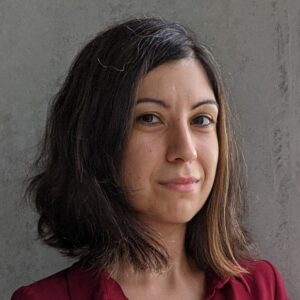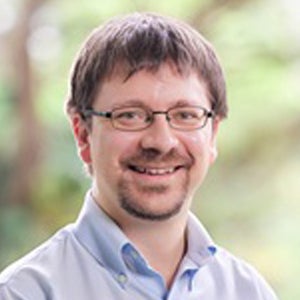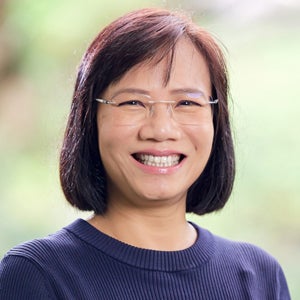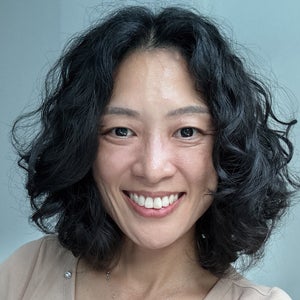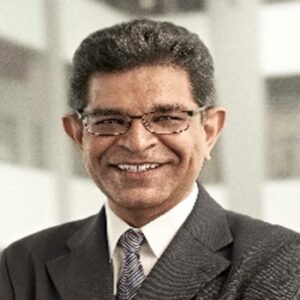

Hui Ting CHNG1,*, Adrian Michael LEE2, Mei Hui LIU3, Vik Gopal4, Yuan Yi CHONG2, Zeehan Jaafar5
1Department of Pharmacy and Pharmaceutical Sciences, Faculty of Science (FoS), National University of Singapore (NUS)
2Department of Chemistry, FoS, NUS
3Department of Food Science and Technology, FoS, NUS
4Department of Statistics and Data Science, FoS, NUS
5Department of Biological Sciences, FoS, NUS
Sub-Theme
Building Professional Relationships
Keywords
Science, STEM, professional learning network, community of practice, grassroot
Category
Lightning Talks
Building professional relationships among educators is widely recognised as a key driver of pedagogical innovation and sustained professional development (Trust et al., 2016). However, opportunities for meaningful cross-departmental engagements are often limited, particularly in disciplinary research-intensive faculties in the university. This absence limits opportunities for educators to build collegial relationships, share pedagogical practices, and develop a collective culture around teaching. In the Faculty of Science (FoS) at the National University of Singapore (NUS), no formal platform previously existed to support such engagements. In response to this gap and inspired by Professor Kathy Takayama’s sharing on Peer Mentoring Circles (PMCs) during her 2023 Educator-in-Residence engagement with the NUS teaching community (Ragupathi et al., 2023), six educators from diverse departments within FoS established the SCience Educator NEtwork (SCENE) in 2024. This grassroots initiative was born from a shared recognition that developing the scholarly practice of teaching requires more than individual effort—it requires relationships built on trust, reciprocity, and a sense of collective responsibility.
SCENE aims to organise and facilitate activities that broaden and deepen knowledge to promote scholarly practice of teaching, serve as a professional network to build and nurture relationships between colleagues across the faculty, and support the career advancement of educators through peer mentorship. At its heart, SCENE seeks to cultivate a supportive environment where science educators can exchange ideas, reflect on pedagogy, and build a community of practice that transcends departmental boundaries.
The development of SCENE aligns closely with research on effective Communities of Practice (CoP) formation in STEM higher education. As Gehrke and Kezar (2017) note, key principles to consider when developing CoP include “design[ing] the community to evolve naturally” and “create[ing] opportunities for open dialog within and with outside perspectives”. These principles were embodied in SCENE’s inaugural session which invited colleagues to reflect on the question: What does it mean to be an educator in science? This session explored shared and unique educational values across different science disciplines. Participants surfaced shared and distinctive educational values across disciplines. The session concluded with a survey in which 26 colleagues expressed interest in future topics and formats for engagement. 62% of the respondents preferred an average of two events per semester. Three key themes of “technology and engagement”, “teaching challenges and solutions” and “innovative teaching methods” emerged as topics that participants were interested to present and share with others. Participants would like to learn about topics such as AI integration in teaching, authentic assessment methods, methods to engage students in their learning and professional development.
The feedback gathered from the survey laid the foundation for a participatory, co-created professional learning network. Building on this momentum, SCENE has since organised sessions on blended learning and evidencing teaching. SCENE has also collaborated with the Career Advancement for Faculty of Arts and Social Sciences (FASS) Educators (CAFÉ), another grassroots educator group at the NUS FASS, to organise a panel discussion to learn about and connect the dots among the various common curriculum courses of the College of Humanities and Sciences.
While much has been written on professional learning communities (Hairon et al., 2017; Stoll et al., 2006; Vescio et al., 2008) and professional learning networks (Trust et al., 2016), less attention has been given to how such networks emerge organically within discipline-based faculties—and how they sustain engagement over time. This paper presentation will contribute to the body of knowledge in this area by sharing from our experience and practice of how a bottoms-up, grassroots initiative enhances individual teaching practice through building relationships in a contextually relevant and sustainable manner.
References
Gehrke, S., & Kezar, A. (2017). The Roles of STEM Faculty Communities of Practice in Institutional and Departmental Reform in Higher Education. American Educational Research Journal, 54(5), 803-833. https://doi.org/10.3102/0002831217706736
Hairon, S., Pin, G. J. W., Kheng, C. C. S., & and Wang, L.-y. (2017). A research agenda for professional learning communities: moving forward. Professional Development in Education, 43(1), 72-86. https://doi.org/10.1080/19415257.2015.1055861
Ragupathi, K., Yeo, Z. H., & Lee, N. (2023). Engagement with 2023 Educator-in-Residence Scholar, Professor Kathy Takayama: Highlights and Insights.
Stoll, L., Bolam, R., McMahon, A., Wallace, M., & Thomas, S. (2006). Professional Learning Communities: A Review of the Literature. Journal of Educational Change, 7(4), 221-258. https://doi.org/10.1007/s10833-006-0001-8
Trust, T., Krutka, D. G., & Carpenter, J. P. (2016). “Together we are better”: Professional learning networks for teachers. Computers & Education, 102, 15-34. https://doi.org/https://doi.org/10.1016/j.compedu.2016.06.007
Vescio, V., Ross, D., & Adams, A. (2008). A review of research on the impact of professional learning communities on teaching practice and student learning. Teaching and Teacher Education, 24(1), 80-91. https://doi.org/https://doi.org/10.1016/j.tate.2007.01.004