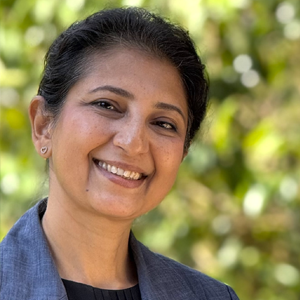

Marissa E Kwan Lin1,*, Jennifer ESTES2, and Haruka SUGIMORI3
1Centre for English Language Communication (CELC), National University of Singapore (NUS); NUS Teaching Academy (NUSTA)
2Department of Sociology and Anthropology, Faculty of Arts and Social Sciences (FASS), NUS; NUSTA
3Department of Sociology and Anthropology, FASS, NUS
Sub-Theme
Building Learning Relationships
Keywords
Interdisciplinary education, teacher and learner subjectivities, teacher-student relationships, learning relationships, interdisciplinarity
Category
Paper Presentation
Interdisciplinary education has been lauded for how it enables learners to develop knowledge and skills that enhance their ability to address complex problems, collaborate and communicate in diverse settings, and exercise critical thinking (Bass et al., 2023). The applicability of such skills and knowledge in a complex and volatile world is relevant to the higher education classroom and beyond (Gardner, 2017).
However, implementing interdisciplinary education can be a challenging task. Xu et al. (2022) have cited various reasons that may contribute to this challenge, for example, lack of motivation among students, as well as interference from assumptions and beliefs stemming from students’ prior experience with academic disciplines. Greef et al. (2017) also mention the demands on faculty designing these interdisciplinary courses, pointing out the need for coherence among the various disciplinary perspectives involved, including, among other important considerations, the implementation of pedagogical approaches that would be suitable and effective for not just different types of students, but course instructors as well (see also Klein & Philipp, 2023).
These challenges, while directly related to teaching and learning in interdisciplinary courses, also involve and impact the subjectivities that course instructors and students bring into and enact in the context of these courses, which in turn play a part in the formation and negotiation of learning relationships in such courses.
Therefore, it is useful to identify and examine these challenges as manifested in specific interdisciplinary teaching and learning contexts and discuss how they may impact aspects of learning relationships, such as students’ and teachers’ abilities to build rapport and trust, in interdisciplinary education.
The College of Humanities and Sciences (CHS) at the National University of Singapore (NUS) has been offering interdisciplinary courses, known as IDCs, in which CHS students are required to enroll in two IDCs. However, there is currently limited understanding of the student experience in these courses, and consequently, how course instructors can potentially develop and facilitate learning relationships that would help students achieve the intended learning outcomes of these courses, and inculcate a deep and durable appreciation of interdisciplinarity.
With pedagogical approaches and interactions being the primary means through which course instructors engage with students enrolled in their courses, our study thus aims to identify and examine the following in the context of CHS interdisciplinary courses:
- Approaches and interactions that students value as effective for their learning
- Approaches and interactions that lead students to devalue or disengage from interdisciplinary learning
We then discuss how the subjectivities of course instructors and students, as well as the learning relationships between students and course instructors are implicated.
Our study is based on focus group discussions involving 27 current CHS students, from a range of majors in both the Faculty of Arts and Social Sciences (FASS) and the Faculty of Science (FOS). The focus group discussions, carried out by a neutral facilitator, captured students’ experiences in depth and made room for “the expression and discussion of the plurality of sometimes contradictory and competing views that individuals and groups hold” (Crang & Cook 2007, 90). A thematic analysis was conducted to highlight areas of interest and concern when it came to the pedagogical approaches and interactions deployed in CHS IDCs, and their relation to course instructor and student subjectivities and learning relationships.
Our preliminary findings are as follows. Firstly, students appreciated open-ended assessments and opportunities to collaborate with peers. Secondly, students’ disciplinary identities influenced how they presented knowledge and made sense of their learning experience in interdisciplinary courses, with this at times leading to tensions between students of contrasting disciplines. Thirdly, while IDCs are meant to challenge preconceived notions of strict boundaries between disciplines, students found their experiences of some IDCs as lacking in depth and interdisciplinary coherence and integration. Finally, IDCs were seen by students as potentially negatively impacting their value in the job market.
Based on the results of the thematic analysis, we discuss the implications for the design and execution of interdisciplinary courses, highlighting how the pedagogical approaches and interactional styles that instructors adopt play a role in shaping student and instructor subjectivities and learning relationships. In turn, these can impact students’ perception of the value of interdisciplinary education in the NUS CHS context and beyond.
References
Bass, M., Dompierre, K.-A. B., & McAlister, M. (2023). Creating transformative interdisciplinary learning opportunities for college students. Journal of Transformative Education 21(1), 118–37. https://doi.org/10.1177/15413446211066934.
Crang, M., & Cook, I. (2007). Doing ethnographies. SAGE.
Gardner, P. (2017). Flourishing in the face of constant disruption: cultivating the t-professional or adaptive innovator through WIL. In Work-Integrated Learning in the 21st Century (world; Vol. 32, pp. 69–81). Emerald Publishing Limited. https://doi.org/10.1108/S1479-367920170000032004
Greef, L. A., Post, G., Vink, C., & Wenting, L. (2017). Designing interdisciplinary education: A practical handbook for university teachers. Amsterdam University Press.
Klein, J. T., & Philipp, T. (2023). Interdisciplinarity. In T. Philipp & T. Schmohl (Eds.), Handbook of transdisciplinary learning (pp. 195–204). transcript Verlag. https://www.degruyterbrill.com/document/doi/10.1515/9783839463475-021/html
Xu, C., Wu, C.-F., Xu, D.-D., Lu, W.-Q., & Wang, K.-Y. (2022). Challenges to student interdisciplinary learning effectiveness: An empirical case study. Journal of Intelligence 10(4), 88. https://doi.org/10.3390/jintelligence10040088