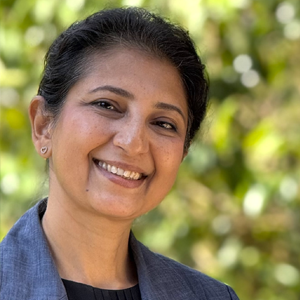

CHOO Li Lin and CHEW Ping Lin
Centre for English Language Communication (CELC),
National University of Singapore (NUS)
Sub-Theme
Building Learning Relationships
Keywords
Liminality, narrative inquiry, reflections, teaching and learning, voice and identity
Category
Paper Presentation
This paper presentation explores, through two individual adjunct English Language (EL) teachers’ reflective accounts, how learning relationships are built between English Language teachers and learners at the tertiary level. English language teachers are an integral group to any international higher education institution, especially in providing language support for students’ academic communication development (Loo et al., 2024). The existence of English language centres or academic English language programmes found in universities globally is testament to that (for example in Japan, see Anderson, 2021; for Australia, see Williamson, 2023; for Singapore, see Frattarola, 2023). While considered a crucial human resource to the university, Fenton-Smith and Gurney (2022) argue that these teachers encounter a range of problems. University EL teachers face challenges because of students’ notion of who or what these teachers should be (Loo et al., 2024; Lee & Chan, 2023). What may further impact the university EL teachers’ emotion and identity (Pennington & Richards, 2016) would be if they were part-time/adjunct academic staff rather than full-time/tenured lecturers with the full benefit of institutional support. Indeed, extensive literature has pointed to the impact of teacher emotion on professional identity development (Beauchamp & Thomas, 2009; Karlsson, 2013; Yip et al., 2022).
Loo et al. (2024) argue that EL teachers at the tertiary level exist in a space of liminality where their identity is in constant flux, especially with the long-standing concern over the lack of clarity on what an EAP (English for Academic Purposes) instructor or practitioner is (see Du et al., 2022). In such a complex situation, tensions may arise. Their paper explored the dynamic nature of EL teachers’ professional identity formation. Our study builds on these earlier discussions into EL teachers’ professional identity formation to explore specifically the role of adjunct university EL teachers residing in a discursive space where professional expectations may be ambiguous.
Through the lens of narrative inquiry, this study examines the lived experiences of two adjunct teachers to explore their “language teacher identity” (LTI) formation as university English teachers (see Barkhuizen, 2017, pp. 4-10 for how LTI is theorised). The two participants differ in terms of their academic and teaching experience across various teaching contexts. The discussion will address how adjuncts develop professionally and examine the factors that dis/empower the adjuncts’ sense of influence over their students’ learning outcomes.
This study will also discuss the professional, administrative, and pedagogical implications arising from the analyses of the narratives and make recommendations for professional development opportunities given to adjuncts to increase their sense of relevance and competence. The presentation will also look at how existing resources can be harnessed to encourage the exchange of ideas between the adjunct and full-time staff as the adjuncts navigate what many consider to be a liminal space to build effective learning relationships with their learners at the tertiary level. The findings of this study are also potentially useful to develop an understanding of the professional development and psyche of adjuncts beyond the English discipline and department.
References
Anderson, T. (2021). The socialization of L2 doctoral students through written feedback. Journal of Language, Identity & Education, 20(2), 134-149. https://doi.org/10.1080/15348458.2020.1726758
Barkhuizen, G. (2017). Language teacher identity research: An introduction. In Reflections on language teacher identity research (pp. 1–11). Routledge, Taylor & Francis Group.
Beauchamp, C., & Thomas, L. (2009). Understanding teacher identity: An overview of issues in the literature and implications for teacher education. Cambridge Journal of Education, 39(2), 175–189. https://doi.org/10.1080/03057640902902252
Loo, D. B., Khuan, J. T. K., Begum, J. R., & Choo, D. (2024). Tensions at the university and living in liminality: English language teachers navigating through new research expectations. rEFLections, 31(3), 1023–1043. https://doi.org/10.61508/refl.v31i3.276351
Du, J., Li, W., & Li, Q. (2022). Who are we, what can we do, and what do we think? Review on EAP teacher development. Chinese Journal of Applied Linguistics, 45(4), 532-550. https://doi.org/10.1515/CJAL-2022-0403
Fenton-Smith, B., & Gurney, L. (2022). Collaborator, applied linguist, academic, expense? Exploring the professional identities of academic language and learning professionals. Higher Education Pedagogies, 7(1), 160-178. https://doi.org/10.1080/23752696.2022.2130390
Frattarola, A. (2023). A review of tertiary-level writing courses in Singapore: Pedagogical approaches and practices. Asia Pacific Journal of Education, 43(2), 368-383. https://doi.org/10.1080/02188791.2021.1914546
Karlsson, M. (2013). Emotional identification with teacher identities in student teachers’ narrative interaction. European Journal of Teacher Education, 36(2), 133–146. https://doi.org/10.1080/02619768.2012.686994
Lee, Y. E., & Chan, C. (2023). Racialised teaching of English language in South Korea: Voices of university ELT teachers. Language, Culture and Curriculum, 36(1), 56-73. https://doi.org/10.1080/07908318.2022.2048001
Pennington, M. C., & Richards, J. C. (2016). Teacher identity in language teaching: Integrating personal, contextual, and professional factors. RELC Journal, 47(1), 5–23. https://doi.org/10.1177/0033688216631219
Williamson, K. (2023). The contested role of translanguaging in English for academic purposes courses: The practices of Chinese international students. Higher Education Research & Development, 42(2), 498-512. https://doi.org/10.1080/07294360.2022.2052812
Yip, J. W. C., Huang, J., & Teng, M. F. (2022). Identity and emotion of university English teachers during curriculum reform in China. Language, Culture and Curriculum, 35(4), 421–439. https://doi.org/10.1080/07908318.2021.2024843