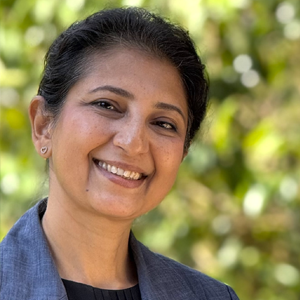

Wisnu A. PRADANA
Centre for English Language and Communication (CELC), National University of Singapore (NUS)
Sub-Theme
Building Learning Relationships
Keywords
Relational pedagogy, care, posthumanism, critical disability studies
Category
Paper Presentation
In our historically competitive, individualistic, and neoliberal educational landscape, the pedagogical importance of care is often overlooked, dismissed as sentimental, or perceived as separate from academic rigor. This marginalisation of care, coupled with pressures to perform and conform to narrow academic metrics, collectively contributes to a range of mental health challenges among students (Storrie et al., 2010; Thompson, 2022). Within the university context, students report higher levels of anxiety than the general population. A recent study found that the global prevalence of anxiety among college students had a median of 32%, with rates ranging from 7.4% to 55% (Tan et al., 2023). In Singapore, growing concern over student mental health is evident across universities. At NUS, for instance, 32% of students are at risk of anxiety and depression, while 53% report experiencing elevated stress levels (Office of Student Affairs NUS, 2025). As a community of educators, this longstanding phenomenon prompts us to ask: What transformations might occur in the classroom if we place care at the epicentre of pedagogy?
This presentation reclaims care as an ethical dimension of teaching, drawing from critical disability studies (e.g., Erevelles, 2011) and posthumanist (e.g., Braidotti, 2013) frameworks to reimagine pedagogical relationships that prioritise human connection and inclusive engagement. Grounded in my longstanding work with students with significant disabilities and diverse linguistic and cultural backgrounds, I propose a model of relational pedagogy (Papatheodorou, 2008; Gravett, 2022) that emphasises care as a critical practice that cultivates trust, responsiveness, and reciprocity. Relational pedagogy is an approach that positions meaningful relationships among human and non-human actors as fundamental to effective learning in higher education (Gravett, 2022). This perspective challenges traditional, individualistic models of education by emphasising interconnectedness and mutual care within the learning process.
This presentation examines relational pedagogy through the lens of communication practices that attend to how students make meaning, learn, and express themselves in ways that may deviate from normative expectations due to disabilities. Drawing on data from my posthuman research—including field notes, interview and focus group transcripts, and participants’ drawings—I focus on a case study of a six-year-old multilingual child with a rare neurological condition who was learning to read using an eye-tracking Augmentative and Alternative Communication (AAC) device in virtual literacy sessions with her teacher and parents. This presentation specifically explores:
- How is care enacted in a literacy education for students with disabilities?
- In what ways can relational pedagogy challenge normative expectations of communication, learning, and participation in the classroom?
- How can insights from inclusive childhood literacy settings inform relational approaches in higher education?
While the primary data in this presentation comes from a childhood education context, I argue that the underlying principles of care, inclusion, and relational pedagogy transcend normative conceptions of age and the boundaries of educational levels. Participants will engage in conversations about relational pedagogy and gain insights into how care is manifested in instructional practices, diverse modalities of communication, and the roles of both human and non-human actors in shaping a learning environment where all participants feel valued and interconnected.
References
Braidotti, R. (2013). The posthuman. Polity Press.
Erevelles, N., & Erevelles, N. (2011). Disability and difference in global contexts: Enabling a transformative body politic (pp. 14-5). Palgrave Macmillan.
Office of Student Affairs, National University of Singapore. (2025). Student wellbeing pulse 2024: Insights on mental health, connection, and resilience on campus. https://osa.nus.edu.sg/wp-content/uploads/2025/03/nus-osa-student-wellbeing-pulse-2024-digital-single-page-updated-1-4.pdf
Papatheodorou, T. (2008). Exploring relational pedagogy. In Learning together in the Early Years (pp. 21-36). Routledge.
Storrie, K., Ahern, K., & Tuckett, A. (2010). A systematic review: students with mental health problems—a growing problem. International journal of nursing practice, 16(1), 1-6. https://doi.org/10.1111/j.1440-172X.2009.01813.x
Tan, G. X., Soh, X. C., Hartanto, A., Goh, A. Y., & Majeed, N. M. (2023). Prevalence of anxiety in college and university students: An umbrella review. Journal of Affective Disorders Reports, 14, 100658. https://doi.org/10.1016/j.jadr.2023.100658
Thompson, M., Pawson, C., Delfino, A., Saunders, A., & Parker, H. (2022). Student mental health in higher education: the contextual influence of “cuts, competition & comparison”. British Journal of Educational Psychology, 92(2), 367-393. https://doi.org/10.1111/bjep.12461